 Save
Save The first time I made falafel from scratch, I stood in my kitchen surrounded by the most intoxicating aroma of cumin and coriander, wondering why I'd spent years buying frozen versions when this was so close to effortless. My friend Hassan had finally shared his family's technique—dried chickpeas, not canned, pulsed just enough to hold together—and within weeks, I was folding crispy golden balls into warm pita like I'd been doing it forever. There's something magical about watching that first batch turn golden in the oil, the sizzle a small symphony that promised something delicious was about to happen.
I remember bringing this to a potluck once, nervous because I'd never fried anything for a group before, and watching people absolutely demolish the platter within ten minutes. One woman came back asking if I'd buy them from her—she was only half-joking. That moment taught me that homemade food doesn't need to be complicated to be extraordinary, it just needs to be made with intention and maybe a little bit of pride.
Ingredients
- Dried chickpeas (1 ½ cups, soaked overnight): This is where the magic starts—canned chickpeas are too wet and will give you dense, mushy falafel that falls apart. Soaking overnight creates the right texture, and I learned this the hard way after three failed batches.
- Fresh herbs (parsley and cilantro, ½ cup each): Don't skip these or use dried versions; they're what makes homemade falafel taste alive and bright instead of one-dimensional.
- Ground cumin and coriander (1 tsp each): Toast them in a dry pan for 30 seconds before using if you have time—it deepens the flavor dramatically.
- Onion and garlic (½ small onion, 3 cloves): These get pulsed into the mix, adding moisture and depth that keeps the falafel tender inside.
- Baking powder (½ tsp): A small amount creates lift and ensures the interior stays fluffy while the exterior crisps up.
- All-purpose flour (2 tbsp): Just enough to help bind without making things dense; it's a light touch that makes a real difference.
- Tahini (½ cup): Buy good tahini if you can—the cheaper stuff tastes grainy and bitter, while quality tahini is smooth and nutty.
- Lemon juice (2 tbsp): Brightens the tahini and prevents it from feeling heavy; fresh squeezed is worth the extra minute.
- Pita bread (4 warmed): Warm your pita right before serving, even if just by holding it over a gas flame for a few seconds—the warmth matters.
- Vegetables for assembly: Keep them crisp and fresh; this is where you taste the difference between a lazy assembly and one made with care.
Tired of Takeout? 🥡
Get 10 meals you can make faster than delivery arrives. Seriously.
One email. No spam. Unsubscribe anytime.
Instructions
- Drain and prep your chickpeas:
- After soaking overnight, drain them completely and pat dry with a kitchen towel—any extra moisture will make the mixture too wet to hold together when fried. This step takes three minutes and saves you from a disaster later.
- Pulse everything into coarse crumbs:
- In a food processor, combine drained chickpeas, onion, garlic, herbs, spices, and salt, pulsing until the mixture looks like breadcrumbs and holds together when you squeeze it in your hand. You want texture here, not a smooth paste—it's what keeps falafel from becoming a dense brick.
- Rest and chill the mixture:
- Stir in baking powder and flour, then refrigerate for at least 30 minutes if you have time. The mixture becomes easier to shape when cold, and the flavors deepen as it sits.
- Heat your oil carefully:
- Pour 2 inches of vegetable oil into a deep skillet and warm it to 350°F—use a thermometer if you have one, as this temperature is crucial. Too cool and your falafel absorbs oil; too hot and it burns outside while staying raw inside.
- Form and fry in batches:
- Wet your hands or use a falafel scoop to form small balls about 1 ½ inches wide, dropping them gently into the oil. Work in batches so they have space to crisp up, frying each side for 2 to 3 minutes until deep golden brown.
- Make your tahini sauce:
- While the falafel finishes, whisk tahini, lemon juice, minced garlic, and salt together, then slowly add cold water until the sauce becomes smooth and pourable—like a loose peanut butter. The water makes all the difference between a thick paste and something you can actually drizzle.
- Assemble with care:
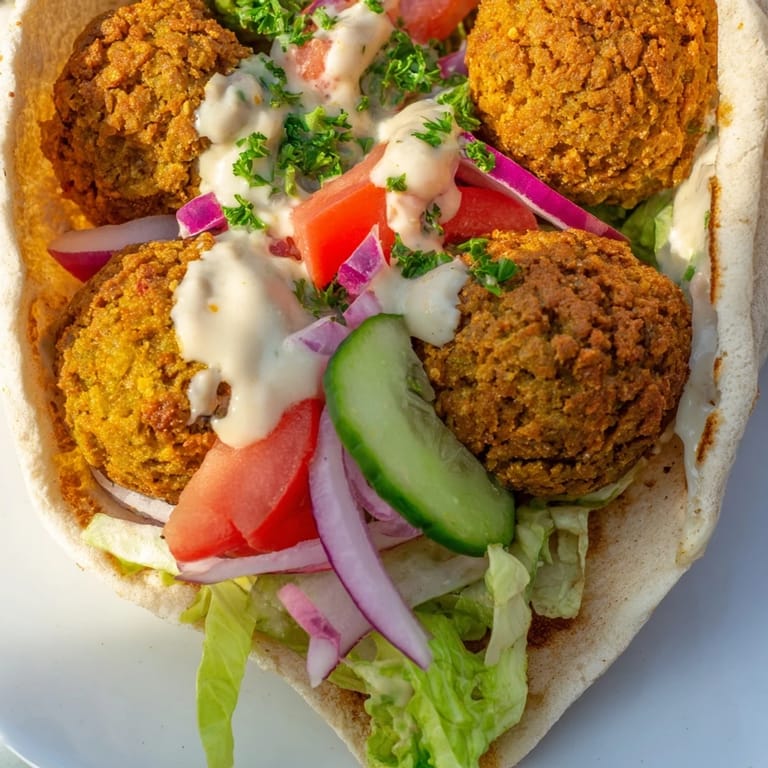
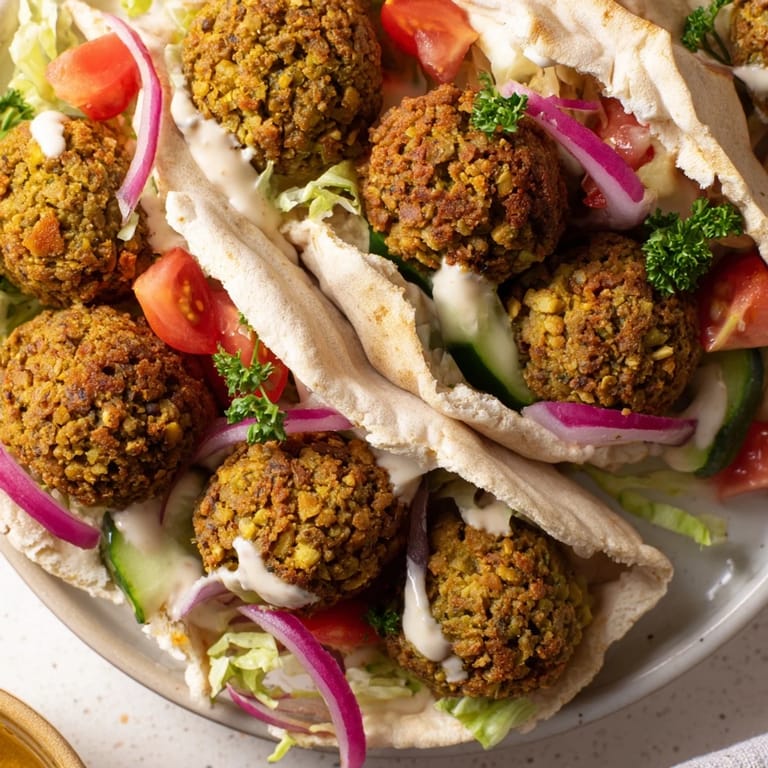
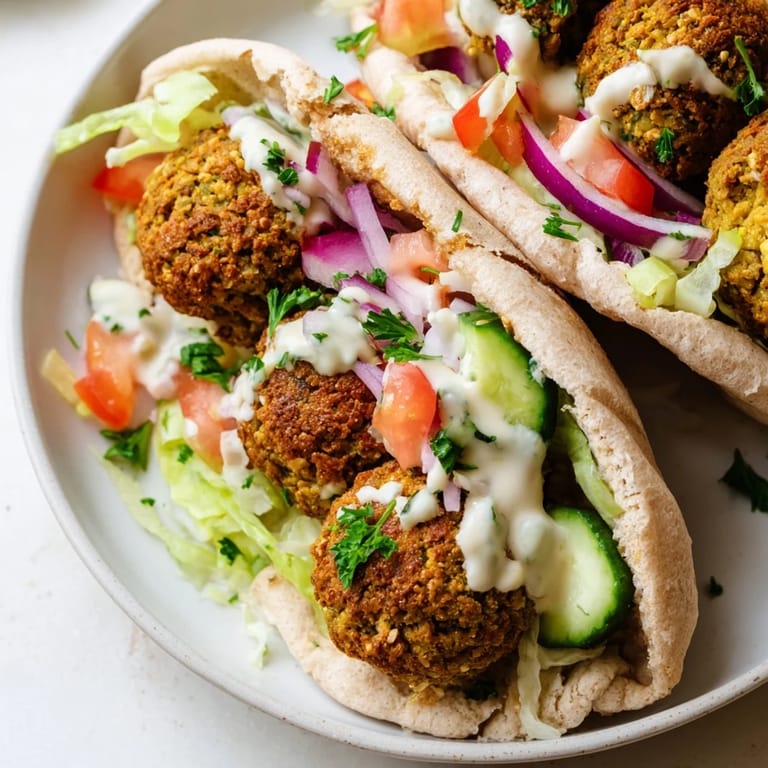
- Cut your warm pita breads in half, create pockets, and layer in crisp lettuce first, then tomatoes, cucumber, and red onion. Tuck in 3 to 4 warm falafel pieces, drizzle generously with tahini sauce, and finish with a shower of fresh parsley.
 Save
Save There's a moment right after frying when you pull that first piece out of the oil and let it rest on paper towels, still crackling slightly as the inside steam escapes, and you know you've nailed it. That's when falafel stops being just a recipe and becomes something you want to make over and over, the kind of dish that pulls people around your table without any fanfare.
Secrets to Extra Crispy Falafel
After my hundredth batch, I realized the crispiness game is won in two ways: first, don't skip the flour and baking powder, which create tiny air pockets that crisp up beautifully; second, make sure your oil is truly hot enough, because a temperature that feels hot to your hand isn't the same as 350°F on a thermometer. I also discovered that chilling the mixture longer—even up to two hours—gives you crispier exteriors without affecting the fluffy inside.
The Tahini Sauce Game-Changer
Most people make tahini sauce too thick or too thin, and it's usually because they're adding water all at once instead of drizzling it in while whisking. The sauce should coat the back of a spoon but still pour easily, and it should taste bright from the lemon juice and smooth from the tahini, with just enough garlic to make your mouth happy. I've started adding a pinch of cumin to mine too, which sounds small but ties the whole dish together in a way that made one friend ask if I was using a secret ingredient.
Building Your Perfect Pita Pocket
Assembly matters more than people realize—layer your vegetables with intent so you get every ingredient in each bite, and always warm your pita so it stays soft and pliable instead of cracking apart as you fill it. The order I follow is lettuce first as a cushion, then tomatoes and cucumber so their juices don't immediately soak the bread, then red onion for brightness, and finally the warm falafel nestled on top before the tahini drizzle and parsley shower.
- Don't assemble more than a few minutes before eating, or the tahini will soften the pita and everything becomes messy.
- Have all your components prepped and ready before you start frying, so you can assemble immediately while everything is warm.
- Serve extra tahini sauce on the side—people always want more, and warm falafel with extra sauce is how you become the person everyone asks to cook.
 Save
Save This is the kind of meal that started as a craving for restaurant food and turned into something I now make at home because it's better and cheaper and mine. Once you've made it a couple times, it becomes automatic—the kind of cooking that feels like second nature and tastes like care.
Recipe FAQs
- → How do I ensure falafel stays crispy after frying?
Drain falafel on paper towels immediately after frying and serve soon to maintain crispiness. Avoid overcrowding the pan while frying.
- → Can I bake the falafel instead of frying?
Yes, bake falafel at 400°F (200°C) for 20–25 minutes, turning halfway for even browning and a lighter texture.
- → What ingredients give falafel its distinctive flavor?
Fresh parsley, cilantro, garlic, cumin, and coriander provide the characteristic herbal and earthy notes in the falafel mix.
- → How is the tahini sauce prepared?
Tahini paste is whisked with lemon juice, minced garlic, salt, and cold water until smooth and pourable, creating a creamy and tangy sauce.
- → Can I customize the vegetables in the pita pocket?
Absolutely. Typical toppings include lettuce, tomatoes, cucumber, and red onion, but pickled turnips or sliced radishes add extra crunch and flavor.