 Save
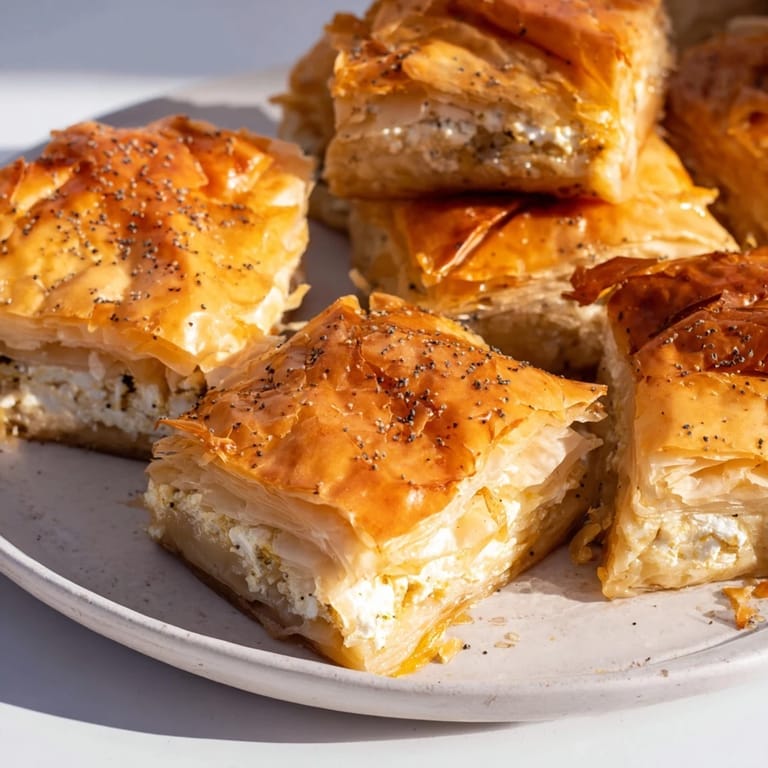
Save The first time I watched my Bulgarian neighbor pull banitsa from her oven, the kitchen filled with a smell I couldn't describe—buttery, cheesy, somehow both delicate and rich at once. She sliced into it without waiting for it to cool, the steam rising off those impossibly thin, golden layers, and handed me a piece that was still soft in the middle but crispy on the edges. I bit into it and understood why this dish has fed families for generations, why it shows up at every Bulgarian table from sunrise to sunset.
I made this for a Sunday brunch once, nervous about working with phyllo for the first time, and my friend arrived to find me with butter on my apron and phyllo sheets somehow stuck to everything. By the time it came out of the oven, golden and crackling, she forgot to be polite about tasting it—she just ate two pieces in silence, then asked for the recipe. That's when I knew I'd gotten it right.
Ingredients
- Feta cheese (400 g, crumbled): This is the soul of the dish; crumble it fresh or buy it pre-crumbled, but avoid the overly brined versions that make everything salty.
- Plain yogurt (250 ml): Use full-fat yogurt if you can find it—it adds a subtle tang and richness that transforms the filling.
- Eggs (4 large): These bind everything together and create that custardy texture that makes banitsa so addictive.
- Phyllo dough (1 package, about 400 g): Thaw it in the fridge overnight, not at room temperature, or it becomes brittle; keep it covered with a damp towel while working.
- Unsalted butter (60 g, melted): The butter is what makes those layers shatter when you bite into them; don't skimp or use oil as a substitute.
- Whole milk (50 ml): This keeps the filling creamy and prevents it from becoming too dense.
- Salt (1/2 tsp) and freshly ground black pepper (1/4 tsp): Season to taste; feta is already salty, so be gentle with the salt shaker.
Tired of Takeout? 🥡
Get 10 meals you can make faster than delivery arrives. Seriously.
One email. No spam. Unsubscribe anytime.
Instructions
- Get everything ready:
- Preheat your oven to 180°C (350°F) and grease your baking dish with a little melted butter so nothing sticks. Having everything in front of you before you touch the phyllo makes the whole process less stressful.
- Make the filling:
- Whisk together the eggs, yogurt, milk, salt, and pepper until it's smooth and creamy, then gently fold in the crumbled feta so you don't crush it into a paste. This gentle touch keeps the cheese pieces distinct, which matters for texture.
- Prepare the phyllo:
- Unroll it carefully and immediately cover it with a damp (not wet) kitchen towel; phyllo dries out in minutes and becomes impossible to work with. If a sheet tears, don't panic—it still layers beautifully.
- Layer the base:
- Lay down one phyllo sheet, brush it lightly with melted butter, then repeat three more times, creating four buttered layers. Light brushing is the secret; too much butter and the layers stick together instead of flaking.
- Add the first filling:
- Spread about one-quarter of the cheese mixture evenly over the phyllo base, getting it all the way to the edges. Don't be shy with the filling—this is what makes it delicious.
- Build the layers:
- Add three or four more buttered phyllo sheets, then another quarter of the filling, and keep alternating until you've used all the filling and it's topped with three to four final buttered phyllo layers. The rhythm of layer, butter, layer, filling becomes almost meditative.
- Score the top:
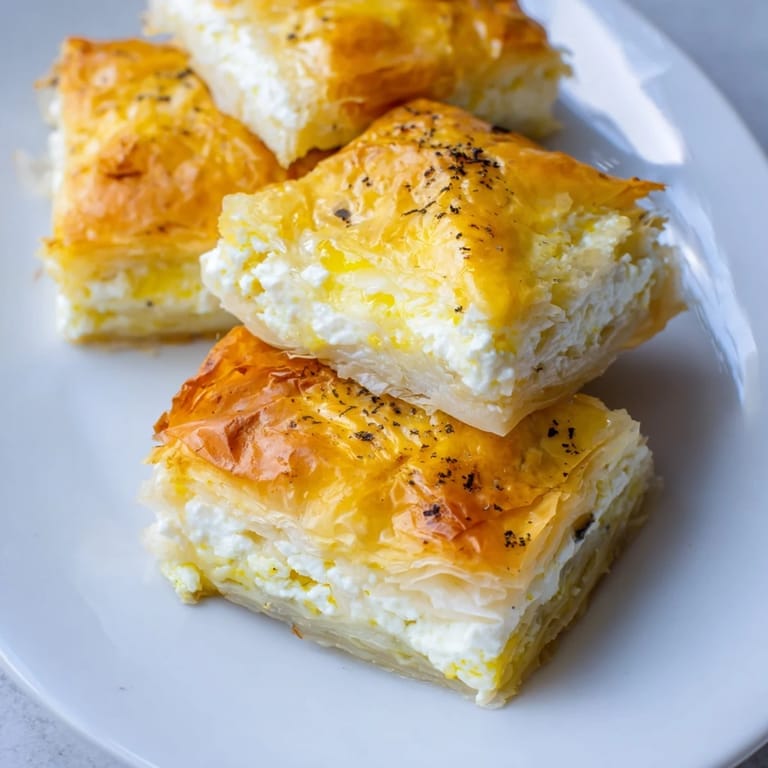
- Using a sharp knife, cut the assembled banitsa into squares or diamond shapes, cutting all the way through to the bottom so they separate cleanly when baked. This also lets the butter seep down and crisp the layers evenly.
- Final butter and bake:
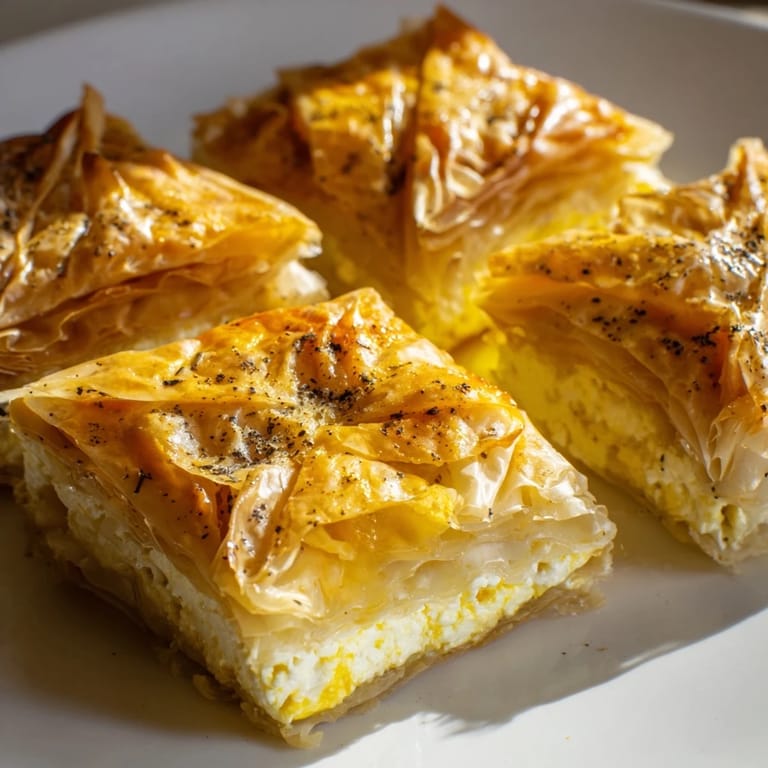
- Drizzle any remaining melted butter over the scored top, then bake for 30–35 minutes until the surface is deep golden and you can hear it crackling slightly. The kitchen will smell absolutely incredible by the end.
- Rest and serve:
- Let it cool for 10 minutes—this helps it hold together when you cut into it—then serve warm or at room temperature. It's equally good either way.
 Save
Save I remember bringing a slice to my coworker who was having a rough morning, and watching her face change the moment she tasted it—how food can be such a small gesture but somehow say everything you can't put into words. That's what banitsa does.
The Right Phyllo Matters
Not all phyllo dough is created equal, and this is one dish where the quality really shows. Thaw your phyllo overnight in the refrigerator—rushing it at room temperature makes it brittle and prone to tearing. When you unroll it, you're holding layer after layer of nearly transparent dough that's only held together by butter and hope, so work gently and keep a damp towel nearby. If a sheet tears, just patch it with another piece or let it fold naturally; the beauty of banitsa is that imperfections disappear once it's baked.
Filling Variations That Work
While the classic feta-and-egg combination is perfect as is, I've played with it enough to know where you can bend the rules. A handful of fresh dill or parsley stirred into the filling adds a subtle garden note that elevates the whole dish, and some people swear by a tablespoon of grated yellow cheese mixed in for depth. You can also replace half the feta with Bulgarian sirene (if you can find it) or ricotta for a milder, creamier filling that's still absolutely delicious and feels like a different dish entirely.
Serving and Storage Tips
Banitsa is one of those rare dishes that tastes just as good—maybe even better—the next day, which makes it perfect for meal prep or feeding a crowd. Store leftovers in an airtight container in the refrigerator for up to three days, and reheat gently in a low oven so the phyllo doesn't dry out completely. Pair it with cold ayran (a traditional yogurt drink) or a simple tomato-cucumber salad to cut through the richness, and don't be surprised when people ask you to make it again.
- Cold leftovers are perfect straight from the fridge with your morning coffee.
- If you want to freeze it, wrap individual portions tightly before baking, then bake from frozen, adding 10–15 minutes to the cooking time.
- Serve it at room temperature for a casual lunch or straight from the oven while it's still steaming for maximum impact.
 Save
Save This recipe is the kind that rewards you for trying it—not because it's technically difficult, but because the results feel far more impressive than the effort requires. Once you've made it once, you'll understand why it's been a Bulgarian staple for centuries.
Recipe FAQs
- → What type of cheese works best for Bulgarian Banitsa?
Feta cheese is traditional, as its salty and creamy texture complements the phyllo layers well. You can also use sirene or ricotta for a milder flavor.
- → How do you prevent phyllo dough from drying out?
Keep the phyllo covered with a damp towel while working to retain moisture and prevent it from becoming brittle.
- → Can I prepare Banitsa ahead of time?
Yes, you can assemble it a few hours before baking and keep it refrigerated until ready to cook.
- → What herbs complement the filling?
Fresh dill or parsley can be added to the filling to enhance its flavor and freshness.
- → How should Banitsa be served?
Serve warm or at room temperature, often accompanied by a yogurt drink like ayran or a fresh salad.