 Save
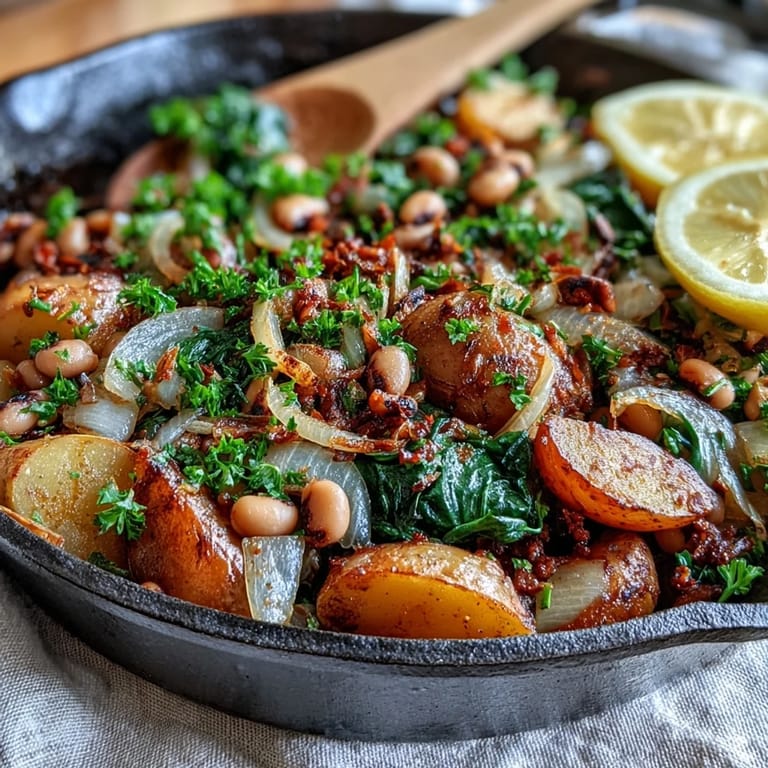
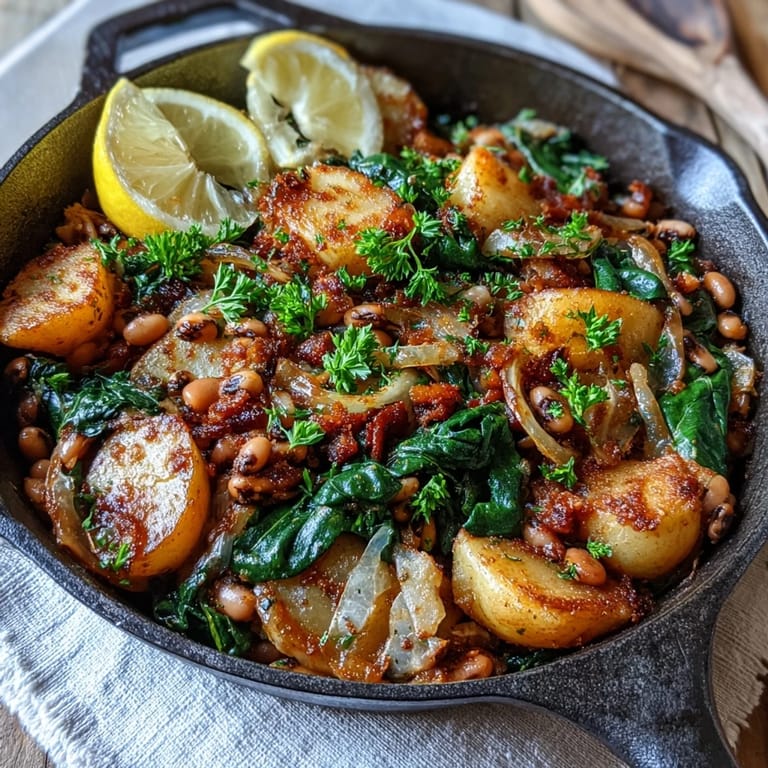
Save There's something about a cast iron skillet that makes even the simplest ingredients feel like they're becoming something special. I discovered this black-eyed pea dinner on a chilly evening when I had potatoes, a can of beans, and a handful of spinach staring back at me from my kitchen. The way everything cooked down together in one pan, the smell of smoked paprika mixing with caramelized onions—it felt less like cooking and more like watching flavors get to know each other. Now it's the meal I return to when I need something honest, filling, and entirely mine.
I made this for my sister last spring when she was going through a phase of trying to eat lighter. She took one bite and said, 'This is what I actually want to eat,' and suddenly I understood that good food isn't about restriction—it's about generosity. She's made it three times since then, texting me photos of her cast iron skillet with the spinach just starting to wilt. That's when I knew this recipe had legs.
Ingredients
- Olive oil: Two tablespoons is enough to build flavor without making things greasy—this is where your cooking really starts, so don't skip it or use the bargain bottle.
- Large yellow onion: Slice it thin and let it have time to soften; those translucent layers are flavor foundations, not afterthoughts.
- Yukon Gold potatoes: These waxy little things hold their shape and have a natural sweetness that plays beautifully against the earthiness of the beans.
- Fresh spinach: Roughly chop it because the knife work matters less when it's about to wilt anyway; aim for about three packed cups.
- Black-eyed peas: Canned works just fine if you rinse them well—that starchy liquid they swim in can make everything gummy if you're not careful.
- Garlic: Three cloves minced fine, and please mince them yourself; the pre-jarred stuff tastes like a memory of garlic, not the real thing.
- Smoked paprika: This is non-negotiable for the character of the dish—it gives you depth without heat, like a warm hand on your shoulder.
- Dried thyme: Half a teaspoon is modest but right; it whispers in the background rather than shouting.
- Crushed red pepper flakes: Optional, but I almost always include a quarter teaspoon because a little heat makes everything else taste more like itself.
- Low-sodium vegetable broth: Half a cup is the right amount to create steam and help the potatoes finish cooking without turning everything into soup.
- Fresh parsley and lemon wedges: These are your finishing touches—parsley for brightness, lemon for that final wake-up call on the palate.
Tired of Takeout? 🥡
Get 10 meals you can make faster than delivery arrives. Seriously.
One email. No spam. Unsubscribe anytime.
Instructions
- Start with heat and oil:
- Set your cast iron skillet over medium heat and let the olive oil get properly warm—you want it shimmering, not smoking. This takes longer than you'd think, maybe a minute or two, but it's worth the patience because hot oil meets onion with a satisfying sizzle.
- Caramelize the onion:
- Slice your yellow onion thin and scatter it into the hot oil, stirring every minute or so for three to four minutes until it turns translucent and takes on a gentle golden edge. Listen for that quiet sizzle; it's telling you things are happening right.
- Build with potatoes:
- Dice your Yukon Golds into roughly half-inch cubes and add them to the onions, stirring occasionally for ten to twelve minutes until they develop golden corners and feel just barely tender when you poke one with a wooden spoon. The bottom of the pan should develop a light, flavorful crust—that's what you want.
- Wake everything up with aromatics:
- Add your minced garlic, smoked paprika, thyme, and red pepper flakes all at once, stirring constantly for exactly one minute so the spices bloom and release their essential oils. Your kitchen will smell like something good is about to happen.
- Bring it together:
- Pour in the vegetable broth and add your drained black-eyed peas, stirring to combine everything evenly, then cover the skillet and let it simmer for eight to ten minutes until the potatoes are fully tender and the liquid has mostly disappeared. Peek under the lid once if you're nervous—there's no shame in checking.
- Add the greens:
- Uncover the skillet and add your chopped spinach in one big pile, then stir for two to three minutes as it wilts down and integrates with everything else. The heat has already been turned off or reduced to low, and the residual warmth is just enough to make the spinach tender without turning it dark and bitter.
- Taste and adjust:
- Sprinkle salt and freshly ground black pepper to your liking, tasting as you go—remember that the broth already carried some saltiness, so be measured. This is the moment when the dish becomes fully yours.
- Finish and serve:
- Transfer to serving bowls or plates, scatter fresh parsley over the top if you have it, and set lemon wedges nearby for people to squeeze as they like. Serve while it's still steaming, when the flavors are brightest.
 Save
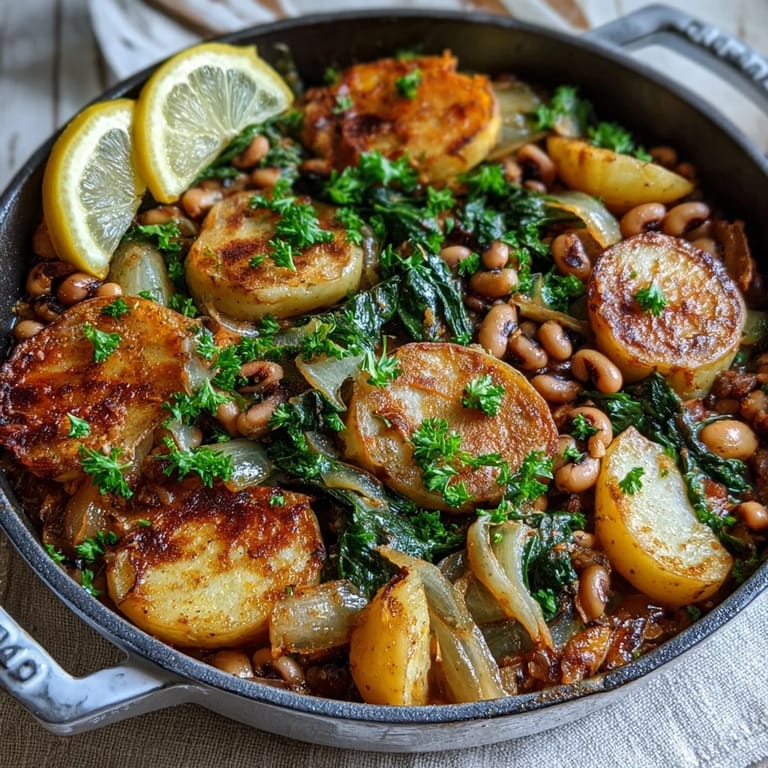
Save My neighbor smelled this cooking through our shared wall one evening and knocked on my door asking what I was making. I gave her a bowl and watched her face change as she tasted it—that moment when simple food becomes proof that you don't need fancy ingredients or complicated technique to feed people something that matters. She still texts me for the recipe sometimes, and I always send her the same answer: make it your own, taste as you go, and don't rush the onions.
Why Cast Iron Matters Here
A cast iron skillet doesn't just cook this dish; it becomes part of the experience. The heavy bottom distributes heat evenly so your potatoes cook through without burning on the bottom, and the metal itself develops character over time, seasoning itself with every meal you make. If you don't have cast iron, a heavy-bottomed stainless steel pan with a lid works fine, but there's something about the weight and retention of a well-loved skillet that makes this meal taste like home cooking in a way nothing else quite does.
Flexibility and Substitutions
This recipe is built on a framework rather than rigid rules, which is what makes it so useful to have in your back pocket. Swap the spinach for kale or Swiss chard if that's what you have; both will take slightly longer to wilt but the end result is equally good. You can add sautéed tempeh cubes or firm tofu for extra protein, throw in diced jalapeños for heat, or serve it over rice instead of alone—each version is still recognizably this dish, still satisfying in its own way.
The Final Touches That Make a Difference
The parsley isn't just decoration; it brings a fresh, alive quality that cuts through the earthiness of the beans and potatoes. The lemon wedges shouldn't be optional in your mind even if they are on paper—a squeeze of bright citrus right before you eat completely transforms each bite, making everything taste more like itself.
- Fresh parsley scattered on top adds color and a peppery brightness that balances the whole dish.
- Lemon wedges should sit on the table so everyone can add acid to their own taste—some like it bright, others prefer it subtle.
- Serve this while it's still hot and steaming, when all the flavors are speaking their clearest language.
 Save
Save This is the kind of meal that teaches you something about cooking if you pay attention. It shows you that simple, honest food made with care and respect for the ingredients matters more than complexity ever will. Make it for yourself, make it for someone you love, and watch how a single skillet can hold something nourishing enough to change how people think about dinner.
Recipe FAQs
- → Can I use dried black-eyed peas instead of canned?
Yes, soak dried black-eyed peas overnight and cook them until tender before adding to the skillet. You'll need about 1 cup dried peas, which will yield approximately 2 cups cooked. Plan for extra prep time if using dried.
- → What other greens work well in this skillet?
Kale, Swiss chard, or collard greens make excellent substitutes for spinach. Keep in mind that heartier greens like kale and collards may need an extra 2-3 minutes of cooking time to become tender.
- → Can I make this dish ahead of time?
This skillet dinner reheats beautifully. Store in an airtight container in the refrigerator for up to 4 days. Reheat gently in a skillet over medium-low heat, adding a splash of water or broth if needed to prevent sticking.
- → What type of potatoes work best?
Yukon Gold potatoes are ideal because they hold their shape well during cooking and develop a lovely golden crust. Red potatoes are a good alternative. Avoid russet potatoes as they tend to fall apart in skillet preparations.
- → Is this suitable for meal prep?
Absolutely. This dish scales well and maintains its texture after refrigeration. Portion into individual containers for easy lunches throughout the week. The flavors actually deepen and improve after a day or two in the refrigerator.