 Save
Save My brother announced his engagement on a rainy Tuesday, and somehow I volunteered to cook the celebration dinner before realizing what I'd just promised. Beef Wellington had always lived in my mind as restaurant territory, something other people made, but there I was, three days out, watching YouTube videos at midnight. The funny thing is, once I stopped being intimidated and just treated it like wrapping a very fancy present, the whole thing clicked. That dinner turned out better than I'd hoped, and now Wellington is my go-to when I want to feel like I'm showing off without actually losing my mind.
I remember standing in my kitchen with that perfectly seared beef cooling on the counter, realizing I had no idea if the mushrooms were supposed to be wet or dry. My friend Maya called right then, and I put her on speaker while I kept stirring, asking if paste-like meant actually paste-like or just sort of thick. She laughed and said trust your instincts, which wasn't helpful but somehow was. When the moisture finally cooked off and the mushrooms clung to the spoon, I felt like I'd cracked a code.
Ingredients
- Beef tenderloin (2 lb): The star of the show, and it's worth spending a little extra for a well-trimmed piece since you're wrapping it in pastry and want every bite to be tender.
- Vegetable oil (2 tbsp): High smoke point is key here because you're searing fast and hot to get that deep brown crust without cooking the inside.
- Cremini mushrooms (1 lb): These have more flavor than white buttons, and chopping them finely by hand gives you better control over texture than a food processor, which can turn them to mush.
- Shallots (2, minced): Sweeter and more delicate than onions, they melt into the duxelles and add a subtle backbone without overpowering the mushrooms.
- Garlic (2 cloves): Just enough to add warmth without making the filling taste like garlic bread.
- Butter (2 tbsp): Adds richness and helps the mushrooms brown instead of steam.
- Fresh thyme (2 tbsp): The herby note that ties everything together, and fresh really does make a difference here.
- Prosciutto (10 slices): Creates a barrier that keeps the pastry crisp and adds a salty, savory layer that makes every bite more interesting.
- Dijon mustard (2 tbsp): A thin coating adds tang and a little heat that cuts through the richness.
- Puff pastry (14 oz): Store-bought is completely fine, just make sure it's fully thawed so it rolls out evenly without cracking.
- Egg (1, beaten): The wash that turns the pastry into that gorgeous burnished gold crust everyone will photograph.
Tired of Takeout? 🥡
Get 10 meals you can make faster than delivery arrives. Seriously.
One email. No spam. Unsubscribe anytime.
Instructions
- Get the oven ready:
- Preheat to 425°F so it's ripping hot when the Wellington goes in. This high heat is what puffs the pastry and crisps the outside while the beef stays perfectly pink inside.
- Sear the beef:
- Season generously with salt and pepper, then sear in smoking-hot oil for about 2 minutes per side until every surface is deeply browned. Let it cool completely on a plate, this step is non-negotiable or the pastry will turn soggy.
- Make the duxelles:
- Melt butter in the same skillet, cook the shallots and garlic until fragrant, then add the mushrooms and thyme. Stir frequently and let all the moisture cook off until the mixture is thick, dark, and almost paste-like, which takes a full 10 minutes.
- Build the prosciutto layer:
- Lay out plastic wrap and arrange overlapping prosciutto slices into a rectangle slightly bigger than your beef. Spread the cooled mushroom mixture evenly over the top.
- Wrap the beef:
- Brush the cooled beef with Dijon mustard, then set it on the duxelles-covered prosciutto. Use the plastic wrap to roll everything tightly around the beef into a neat log, twist the ends like a candy wrapper, and chill for 20 minutes to firm up.
- Encase in pastry:
- Roll out the puff pastry on a floured surface until it's large enough to wrap around the beef bundle. Unwrap the beef, place it in the center, fold the pastry over, trim any excess, and seal the edges by pressing firmly.
- Prep for baking:
- Place seam-side down on a parchment-lined baking sheet, brush the whole thing with beaten egg, and if you're feeling fancy, cut shapes from pastry scraps to decorate the top. Chill for 10 minutes so the pastry sets before baking.
- Bake to golden perfection:
- Slide into the oven and bake for 40 to 45 minutes until the pastry is puffed and deeply golden. Use an instant-read thermometer to check the beef: 120°F for rare, 130°F for medium-rare.
- Rest and slice:
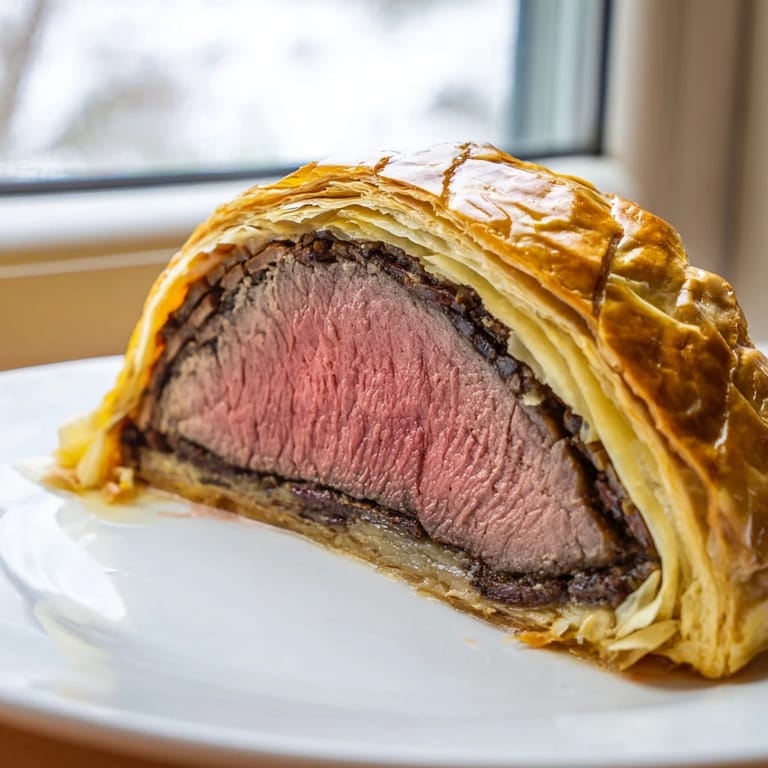
- Let the Wellington rest on the baking sheet for 10 to 15 minutes so the juices redistribute. Slice with a sharp knife, wiping the blade between cuts for clean, beautiful portions.
 Save
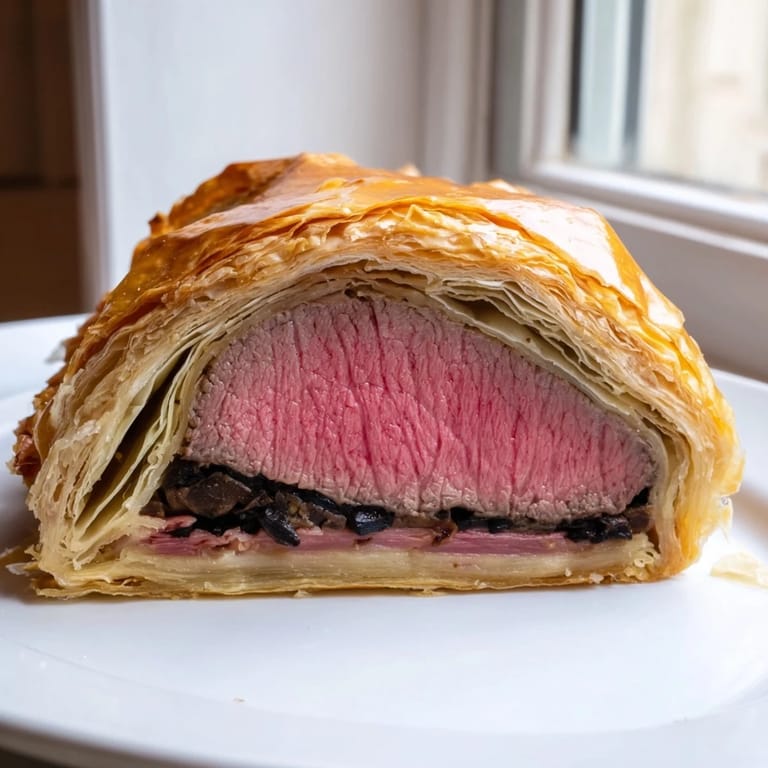
Save When I brought that first Wellington to the table and sliced into it, my brother went quiet for a second, then looked up and said this is actually perfect. It wasn't just the food, it was the fact that I'd pulled off something none of us thought I could do. We toasted with cheap wine in nice glasses, and the whole night felt like we'd crossed into some new version of adulthood where homemade fancy food was possible.
Serving Suggestions
A simple red wine reduction or pan jus is classic, but honestly, the Wellington is so rich and flavorful that a handful of roasted vegetables and some crispy potatoes are all you need on the side. I've served it with mashed potatoes, roasted carrots, and green beans, and the simplicity lets the beef shine without competing. If you want to go all out, a peppercorn sauce or even a horseradish cream adds a sharp contrast that cuts through the richness beautifully.
Make-Ahead Strategy
You can assemble the whole Wellington up to the point of baking, wrap it tightly in plastic, and refrigerate it for up to 24 hours, which is a lifesaver if you're hosting. Just add an extra 5 minutes to the baking time since it's going in cold. I've also frozen the wrapped, unbaked Wellington for up to a month, then baked it straight from frozen at the same temperature for about an hour, checking the internal temp to be sure.
Storage and Leftovers
Leftover Wellington keeps in the fridge for up to three days, and while reheating in the oven at 350°F for about 15 minutes helps crisp the pastry, I'll admit that cold slices on crusty bread with a smear of mustard might be even better. The pastry won't be as flaky the second time around, but the flavors deepen overnight and the beef stays tender.
- Wrap individual slices in foil to reheat without drying out the beef.
- Avoid the microwave if you can, it turns the pastry rubbery and sad.
- If you're reheating a whole portion, tent it loosely with foil for the first 10 minutes to keep the pastry from burning.
 Save
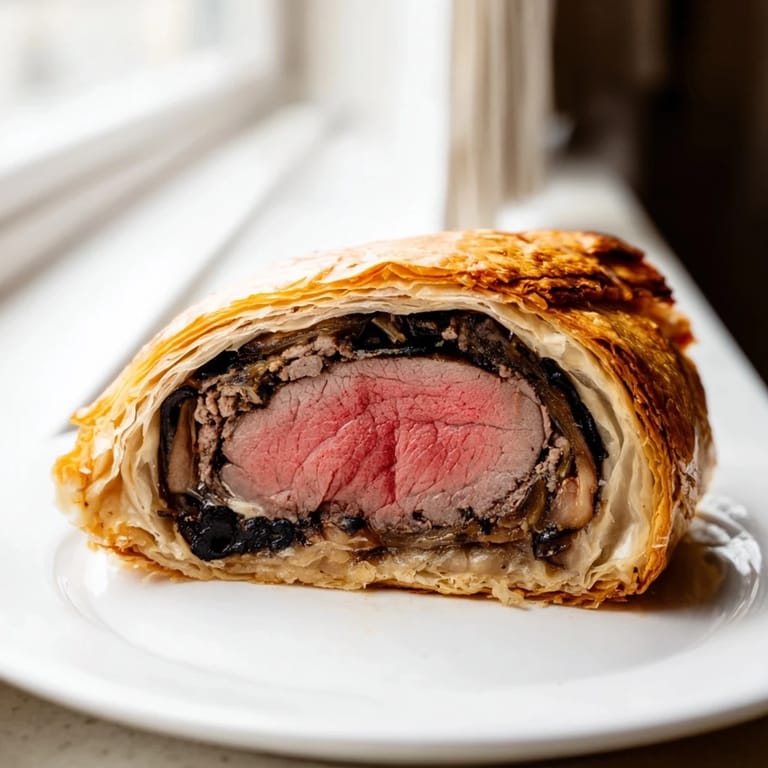
Save Every time I make this now, I think about how scared I was that first time, convinced I'd mess it up in front of everyone who mattered. The truth is, Beef Wellington is forgiving if you respect the steps, and the payoff is worth every minute of effort.
Recipe FAQs
- → Can I prepare Beef Wellington ahead of time?
Yes, you can assemble the wellington up to 8 hours ahead. Keep it refrigerated on a baking sheet, covered with plastic wrap. Bake directly from the refrigerator, adding 5-10 minutes to the cooking time.
- → How do I achieve a perfectly cooked center without overbaking the pastry?
Use an instant-read thermometer to monitor the beef's internal temperature. The pastry cooks quickly, so monitor it closely during the final minutes. If the pastry browns too fast, tent it with foil while continuing to bake the beef to temperature.
- → What's the purpose of the mushroom duxelles layer?
The duxelles creates a moisture barrier that prevents the pastry from becoming soggy while adding rich, earthy flavor. The finely chopped mushrooms, when cooked until dry and paste-like, cling to the prosciutto and protect the pastry from beef juices.
- → Why is searing the beef important?
Searing the beef on all sides creates a flavorful crust through the Maillard reaction and helps seal in juices. Allow it to cool completely before wrapping to ensure the pastry doesn't steam and become soggy.
- → Can I substitute the beef tenderloin with a different cut?
Beef tenderloin is ideal due to its tenderness and even thickness. Avoid tougher cuts that require longer cooking. For variation, center-cut beef loin can work if trimmed to uniform thickness.
- → What should the beef temperature be for medium-rare?
Medium-rare beef reads 130-135°F (54-57°C) on an instant-read thermometer. Remember carryover cooking will raise the temperature by 5 degrees during the 10-15 minute rest, so aim for 125°F (52°C) when removed from the oven.