 Save
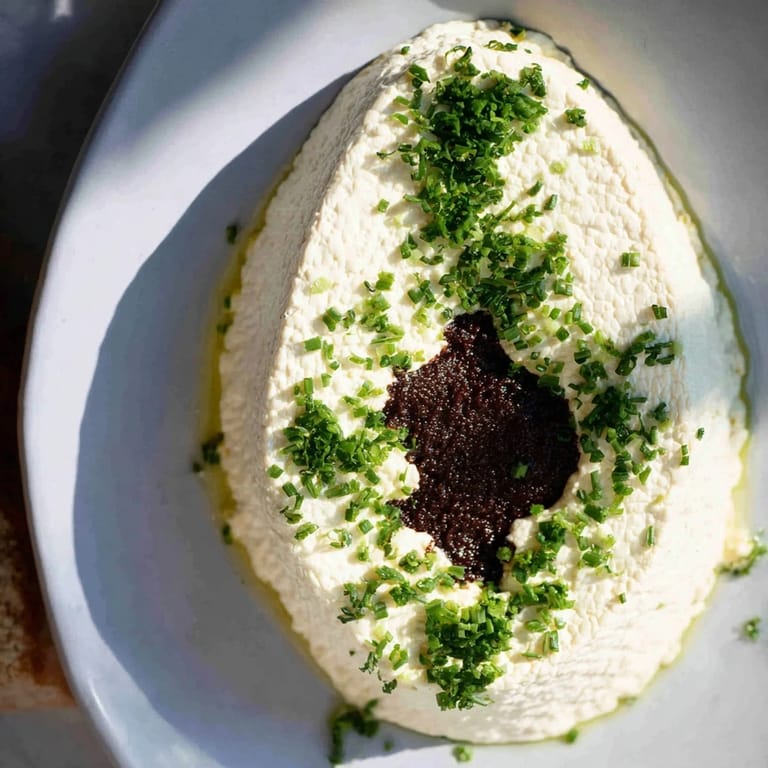
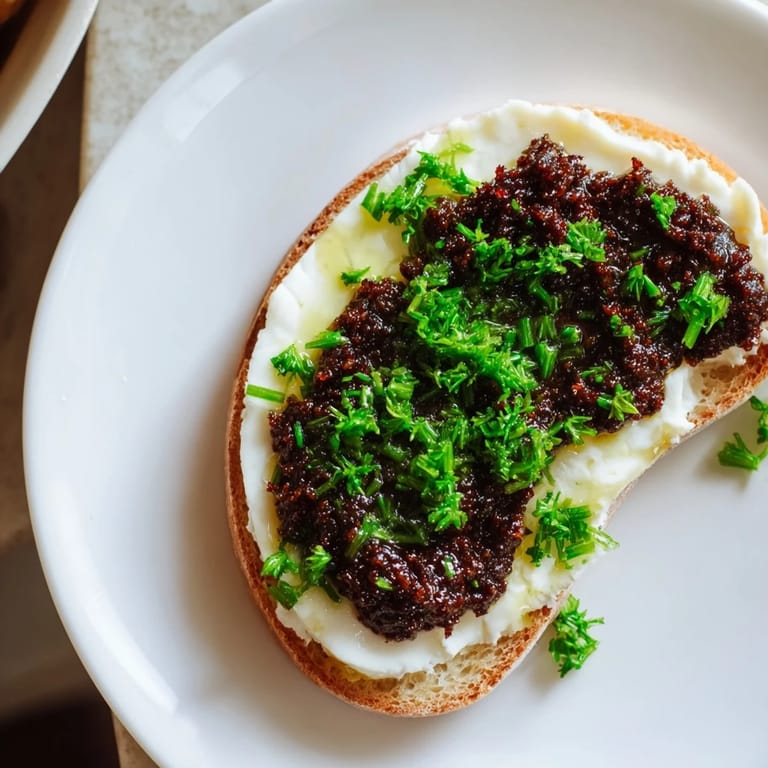
Save I discovered this little trick at a gallery opening years ago, watching a caterer transform simple ingredients into something that looked like it belonged in a museum. The way she shaped that creamy cheese and draped the dark olive paste across it—it was almost too beautiful to eat. I've been making versions of it ever since, each time realizing how elegantly simplicity can feel luxurious when you pay attention to presentation.
My sister brought these to her book club and someone actually asked for the recipe before tasting one—they just wanted to know what could be so visually striking. That moment taught me that food presentation isn't pretentious; it's a quiet way of saying you care enough to make the ordinary feel special.
Ingredients
- Fresh goat cheese or cream cheese (200 g): The creamy base holds its shape beautifully when chilled slightly; if yours seems too soft, refrigerate for an hour before shaping.
- Black olive tapenade (80 g): This is where the drama happens—use quality tapenade or make your own for deeper flavor and total control.
- Rustic baguette or gluten-free crackers: Optional but highly recommended; they give people something to do with their hands and stretch the appetizer further.
- Fresh herbs like thyme or chives: The final flourish that makes each plate feel intentional rather than thrown together.
- Extra virgin olive oil: A good one makes all the difference; drizzle it like you mean it.
Tired of Takeout? 🥡
Get 10 meals you can make faster than delivery arrives. Seriously.
One email. No spam. Unsubscribe anytime.
Instructions
- Shape your canvas:
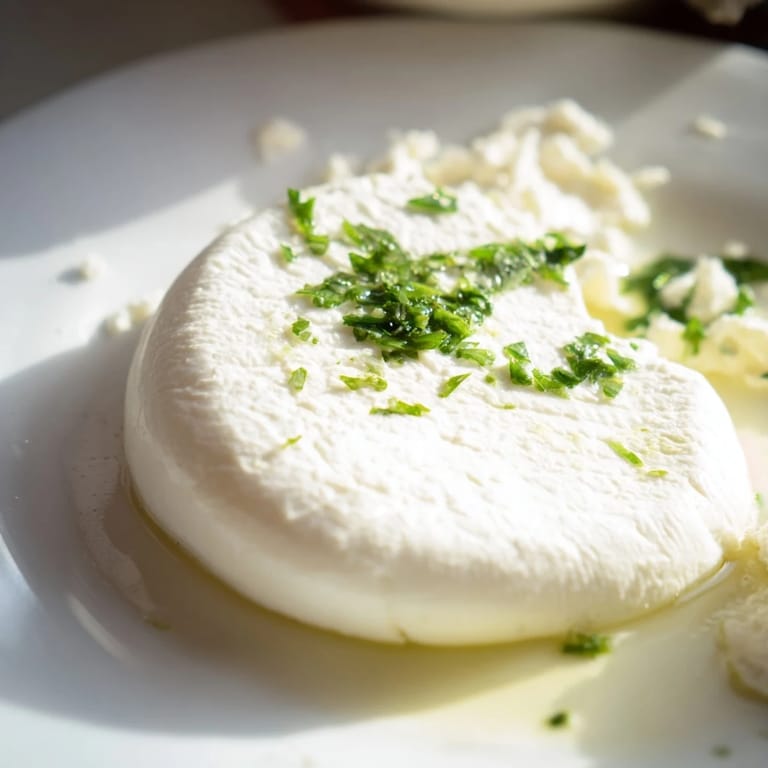
- Scoop the cheese and form it into four thick ovals, each about 2 cm tall—think of them as little edible sculptures. If the cheese is too warm, chill it for 10 minutes so it holds its shape without crumbling.
- Paint the silhouette:
- With the back of a spoon or small spatula, spread a thin, deliberate stroke of tapenade across each oval as if sketching a profile. The unevenness is part of the charm; it shouldn't look mass-produced.
- Add the finishing touches:
- Drizzle a thread of olive oil around each piece and sprinkle your herbs where they catch the light. Serve right away while the cheese still has that perfect cool texture.
 Save
Save There's something about plating something this simple yet striking that changes how people eat it. They pause, they notice, they actually taste instead of just consuming. That shift in attention is what this recipe is really about.
Making It Your Own
Once you understand the basic structure—cheese, dark contrast, fresh accent—you can play. I've used roasted red pepper paste for a brighter look, walnut tapenade for earthiness, and even a thin smear of sun-dried tomato for warmth. The beauty is in the tension between the creamy and the intense, whatever flavors you choose to create that.
The Vegan & Dietary Angle
Plant-based cream cheese works surprisingly well here—sometimes I can't even tell the difference once everything is plated. The key is finding one that's firm enough to shape; softer spreads will blur your beautiful lines.
Timing & Wine Pairing
Assemble these no more than 30 minutes before serving so the cheese stays cool and firm. For drinks, a crisp Sauvignon Blanc cuts through the richness beautifully, or if you want something lighter, a chilled Vermentino or even a dry Prosecco works like a charm.
- Serve these while the cheese is still cool to the touch for the best texture contrast.
- If you're making them for a crowd, assemble the cheese shapes ahead and add the tapenade just before guests arrive.
- Keep extra bread or crackers nearby so people have options for how they want to eat these.
 Save
Save This recipe taught me that elegance isn't about effort—it's about intention. Make these with care, and they'll do the work of making you look thoughtful.
Recipe FAQs
- → What type of cheese works best for Victorian Cameo?
Fresh goat cheese (chèvre) or cream cheese offers a creamy texture and mild flavor, ideal for shaping and complementing the tapenade's robust taste.
- → Can I make the tapenade from scratch?
Yes, blend pitted black olives, garlic, capers, lemon juice, and olive oil until smooth to create a fresh, homemade olive tapenade.
- → What garnishes enhance the flavor and presentation?
Finely chopped fresh herbs like thyme or chives add color and a subtle aromatic note, while a drizzle of extra virgin olive oil enhances richness.
- → Are there gluten-free serving options?
Absolutely, serve the cheese and tapenade medallions on gluten-free crackers or bread alternatives to accommodate gluten sensitivities.
- → What wine pairs well with this appetizer?
A crisp Sauvignon Blanc or a light Pinot Noir enhances the dish's vibrant flavors without overpowering the delicate cheese and olive notes.