 Save
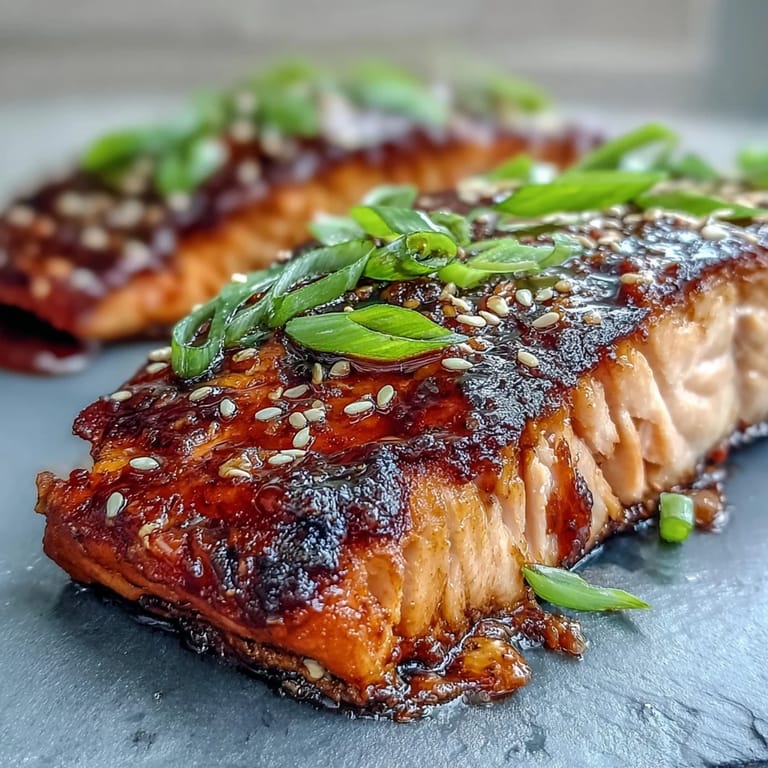
Save There's a particular magic that happens when salmon hits a hot oven with a glossy glaze clinging to its flesh—the kitchen fills with this umami-rich aroma that makes everyone pause and ask what's for dinner. I stumbled onto this teriyaki version during a weeknight when I had salmon thawing and absolutely no appetite for my usual preparations, so I raided the pantry for soy sauce and mirin instead. What emerged fifteen minutes later was so restaurant-quality that my partner actually set down his phone, which, if you know him, never happens. The glaze caramelizes just enough to catch light on the plate, and somehow it feels fancier than the effort demands.
I made this for my sister's boyfriend the first time he came to dinner, and I was genuinely nervous because he's one of those people who knows food. But watching him take that first bite, pause, and then immediately ask for the recipe—that's when I realized this wasn't just a good dish, it was a conversation starter. Now whenever they visit, it's the unspoken request.
Ingredients
- Salmon fillets (4 pieces, about 170 g each): Choose pieces of similar thickness so they cook evenly; skin-on keeps the fillet tender and adds flavor, but skinless works beautifully too.
- Soy sauce (60 ml): Low sodium lets you control the salt and prevents the glaze from becoming overwhelming, but regular works if that's what you have.
- Mirin (60 ml): This sweet rice wine is what makes teriyaki actually teriyaki—don't skip it or substitute, it's the backbone of the flavor.
- Honey or brown sugar (2 tbsp): Adds depth and helps the glaze caramelize when it hits the oven's heat.
- Rice vinegar (1 tbsp): Brings brightness and prevents the glaze from tasting one-note sweet.
- Fresh ginger (2 tsp, grated): Use a microplane if you have one; it releases oils that make the whole glaze sing.
- Garlic cloves (2, minced): Slice them thin rather than chunky so they dissolve into the sauce.
- Sesame oil (1 tsp): Just a teaspoon is enough—this stuff is potent and a little goes a long way.
- Cornstarch (1 tbsp) and cold water (2 tbsp): Creates a slurry that thickens the glaze to a glossy coat; if you skip this, you'll have a runny sauce.
- Toasted sesame seeds (2 tsp) and spring onions (2, sliced): These aren't just garnish; they add texture and freshness that cuts through the richness.
Tired of Takeout? 🥡
Get 10 meals you can make faster than delivery arrives. Seriously.
One email. No spam. Unsubscribe anytime.
Instructions
- Get your oven ready:
- Preheat to 200°C (400°F) and line your baking tray with parchment paper or foil—this prevents sticking and makes cleanup almost nonexistent. Have everything else prepped before the oven reaches temperature so you're not standing around waiting.
- Build the glaze:
- Combine soy sauce, mirin, honey, rice vinegar, ginger, garlic, and sesame oil in a small saucepan and bring it to a simmer over medium heat. You'll notice the smell change as it warms—that's your cue that the flavors are waking up.
- Thicken it to perfection:
- Mix cornstarch and cold water in a bowl until smooth, then pour it into the simmering sauce while stirring constantly for 2–3 minutes. The sauce will shift from thin and glossy to thick and clingy, like it's ready to hug every inch of salmon.
- Prepare the salmon:
- Pat your fillets completely dry with paper towels—moisture is the enemy of a good crust—then place them skin-side down on the prepared tray. Brush each one generously with the glaze, saving some for drizzling after cooking.
- Bake until just cooked:
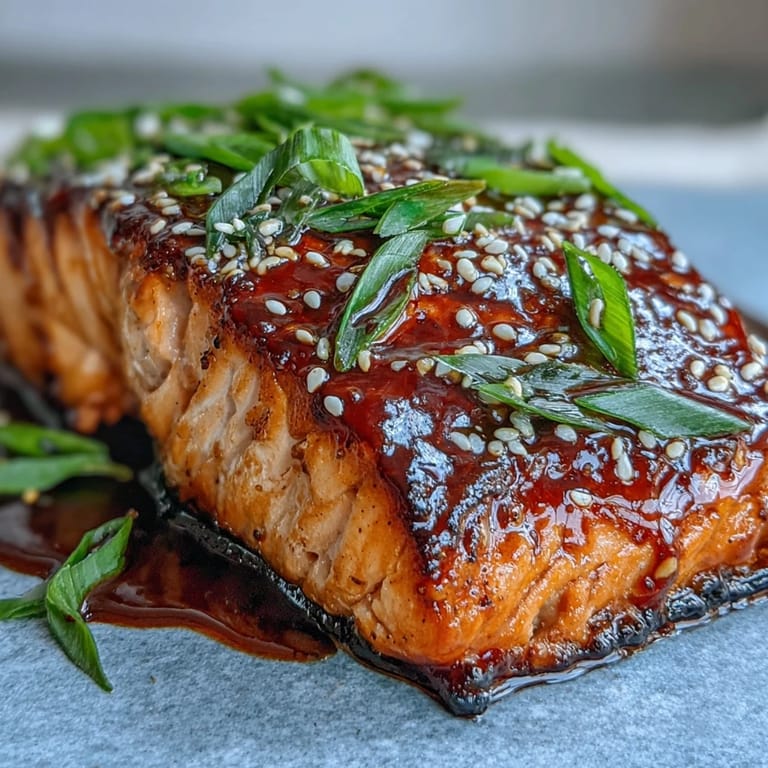
- Slide into the oven for 10–12 minutes; you're looking for the flesh to be opaque and flake easily when you press it with a fork. If you want that extra caramelized finish that catches the light, blast it under the broiler for 1–2 minutes right before serving.
- Plate and finish:
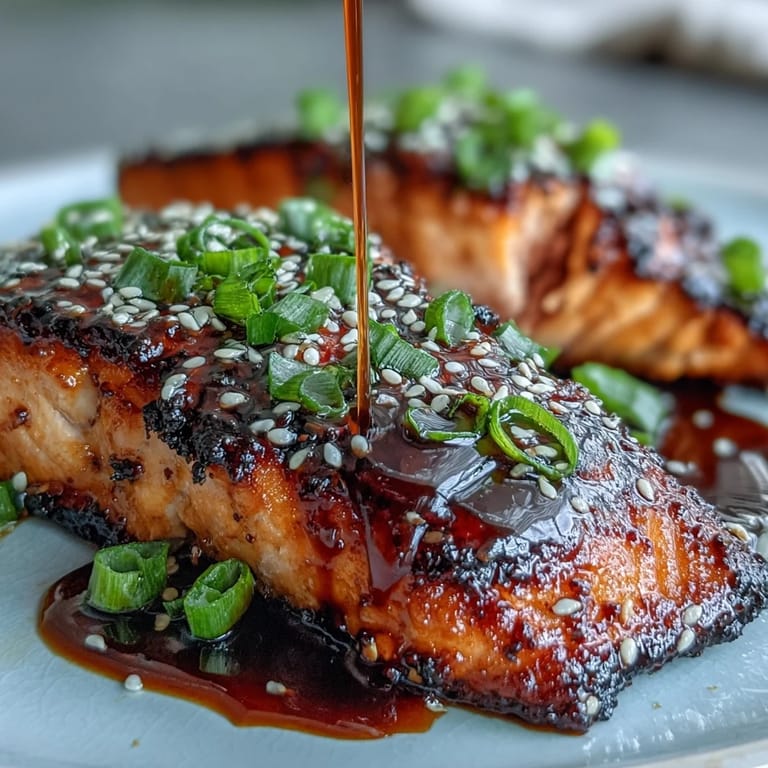
- Transfer each fillet to a plate, drizzle with the reserved glaze, then scatter sesame seeds and spring onion slices on top. Serve immediately while the salmon is still warm and the glaze is still glossy.
 Save
Save There was a moment last month when my daughter actually asked for seconds without being prompted, and she pointed at the glaze with her fork and said it tasted like the fancy place we went for her birthday. That's the moment you know a recipe has moved from "weeknight dinner" to "something that matters."
Timing and Temperature Matter
Salmon is forgiving up to a point, but overcooking it by even a few minutes transforms it from tender and buttery to dry and stringy. The 10–12 minute window at 200°C is sweet spot for most home ovens, though oven temperatures vary wildly—if yours runs hot, start checking at nine minutes. The broiler finish is optional but genuinely worth it if you want that restaurant-quality caramelized top that catches light on the plate.
Customizing the Heat and Flavor
The base glaze is perfectly balanced as written, but it's also a platform for your preferences. A pinch of chili flakes stirred in at the end adds warmth without overpowering the umami, and if you like things more savory than sweet, reduce the honey by half a tablespoon. Some people finish the plate with a squeeze of lime juice, which brightens everything and feels especially good in summer.
Serving and Pairing Ideas
Teriyaki salmon practically demands steamed jasmine rice or sushi rice to soak up the glaze, but sautéed green beans or bok choy work equally well. The dish is light enough that it pairs with chilled sake or a crisp white wine, and it tastes just as good cold the next day if you have leftovers, though honestly, you probably won't.
- Serve with steamed rice or noodles to catch every drop of glaze.
- Add pickled ginger and a cucumber salad on the side for brightness and contrast.
- For a complete meal, pair with blanched broccoli or sautéed mushrooms.
 Save
Save This is the kind of dish that reminds you why cooking at home is worth the effort—you get better results, fewer surprises, and the satisfaction of knowing exactly what went into your food. Make it once, and it'll become the meal you turn to when you want to feel like you tried.
Recipe FAQs
- → What cut of salmon works best?
Center-cut fillets about 170g (6 oz) each work beautifully. Choose portions with even thickness for uniform cooking. Skin-on helps retain moisture during baking, though skinless works well too.
- → Can I make the glaze ahead?
Absolutely. Prepare the teriyaki sauce up to 3 days in advance and store refrigerated in an airtight container. Reheat gently before brushing over the salmon, adding a splash of water if thickened.
- → How do I know when salmon is done?
The salmon is ready when it flakes easily with a fork and the internal temperature reaches 63°C (145°F). The flesh should turn opaque and slightly pink, with a gentle bounce-back when pressed.
- → What can I substitute for mirin?
Dry sherry or white wine vinegar with a pinch of sugar makes a suitable alternative. For a non-alcoholic option, use additional rice vinegar mixed with 1/2 teaspoon sugar to mimic mirin's sweetness.
- → Is this gluten-free?
Simply swap regular soy sauce for tamari or coconut aminos to make this dish gluten-free. All other ingredients, including the salmon and garnish, are naturally gluten-free.
- → What sides complement this dish?
Steamed jasmine rice creates a perfect canvas for the glossy glaze. Sautéed bok choy, roasted broccoli, or stir-fried vegetables add fresh contrast. A crisp white wine or chilled sake balances the sweetness.