 Save
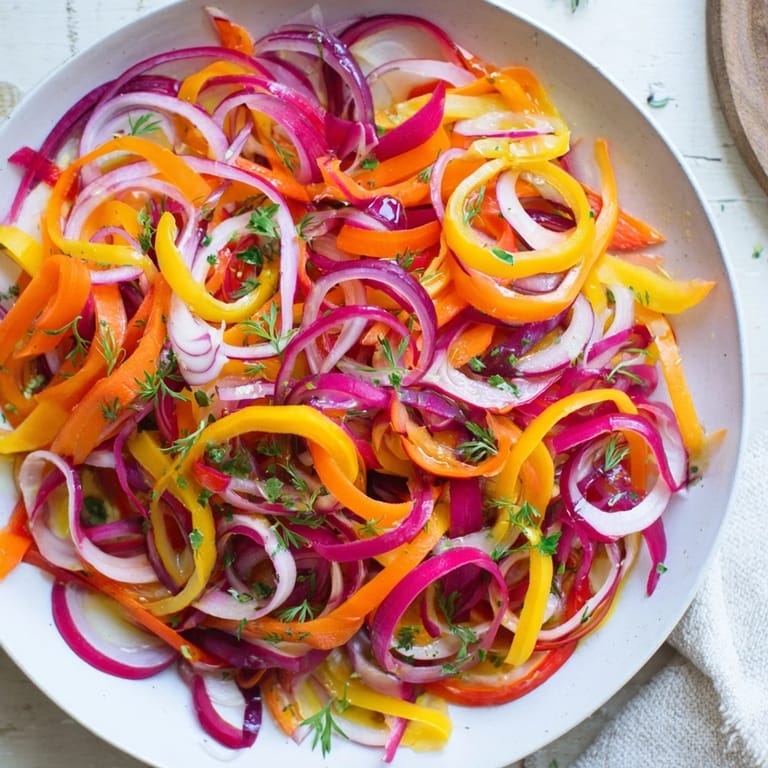
Save I discovered this salad while watching a chef plate vegetables with almost surgical precision at a friend's dinner party, and I became obsessed with recreating that sense of controlled chaos on a plate. There's something magnetic about raw vegetables when they're sliced thin enough to see light through them, and that night, I realized I'd been cutting vegetables wrong my entire life. The mandoline became my new favorite tool, and this spinning arrangement became my go-to when I wanted to impress without spending hours in the kitchen.
I made this for my partner's family gathering on a hot summer afternoon when the kitchen felt too warm for anything hot, and watching their faces when they saw it spinning across the table made me understand why plating matters. Someone asked if it was too pretty to eat, which is exactly the compliment I was hoping for but never expected to actually receive. That moment solidified this salad as my emergency dinner party weapon.
Ingredients
- Fennel bulb: Use a medium one and slice it thin enough that the natural ridges become transparent layers, which creates an almost lacy effect when layered.
- Rainbow carrots: Hunt for different colors if you can find them, because the visual variety is half the magic here, and they taste subtly different depending on color.
- Golden beet: It won't bleed red juice all over your plate like regular beets, keeping your arrangement pristine and colorful.
- Red onion: Just a thin sliver scattered throughout keeps things sharp without overwhelming the gentler vegetable flavors.
- Fresh dill sprigs: The feathery leaves catch light beautifully and add an herbal brightness that feels summery and alive.
- Fresh chervil or parsley: Chervil is more delicate if you can find it, but parsley works perfectly and has that slightly peppery edge.
- Microgreens: These tiny leaves are pure flavor concentration and add professional polish to the outer edge.
- Extra-virgin olive oil: Use your best bottle here because nothing else is cooking it down or masking its flavor.
- Lemon juice: Fresh squeezed makes a noticeable difference in brightness and prevents that flat bottled taste.
- Honey: It balances the acidity and mustard with a whisper of sweetness that ties everything together.
- Dijon mustard: Don't skip it, the sharpness is what keeps this from tasting like plain vegetables with oil.
Tired of Takeout? 🥡
Get 10 meals you can make faster than delivery arrives. Seriously.
One email. No spam. Unsubscribe anytime.
Instructions
- Shave your vegetables into ribbons:
- A mandoline slicer is genuinely worth the investment here, but a sharp vegetable peeler works if you take your time and keep your fingers clear. You want the slices thin enough that light passes through them almost like stained glass.
- Crisp them in ice water:
- This step takes five to ten minutes and feels like magic as the ribbons curl and bunch naturally, creating movement before you even arrange them. Drain and pat completely dry so the dressing coats them instead of sliding off.
- Build your dressing:
- Whisk the oil, lemon juice, honey, mustard, salt, and pepper in a small bowl until it's emulsified and tastes bright and balanced. Taste as you go and adjust the lemon or honey to match your preference.
- Create the circular arrangement:
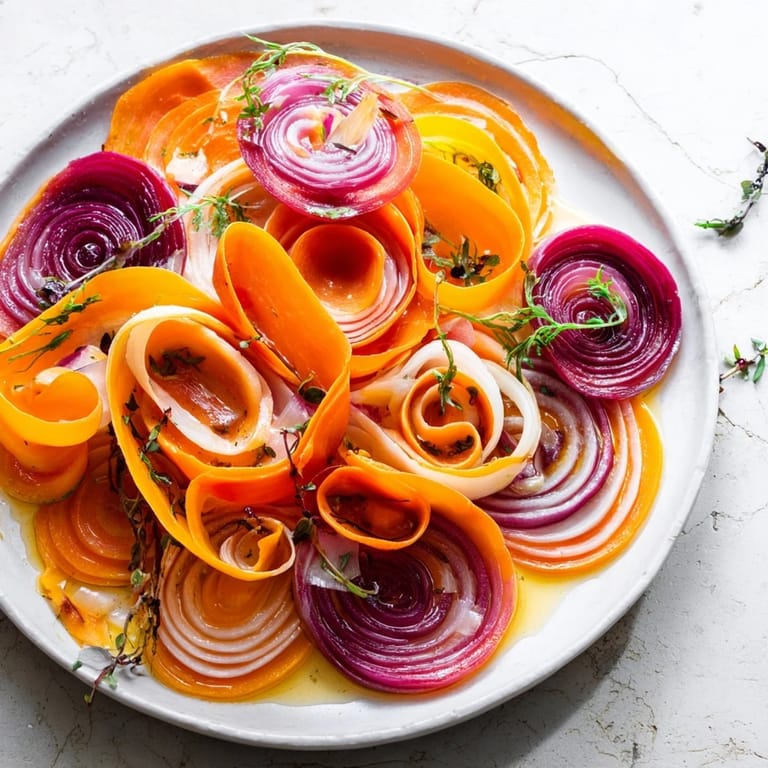
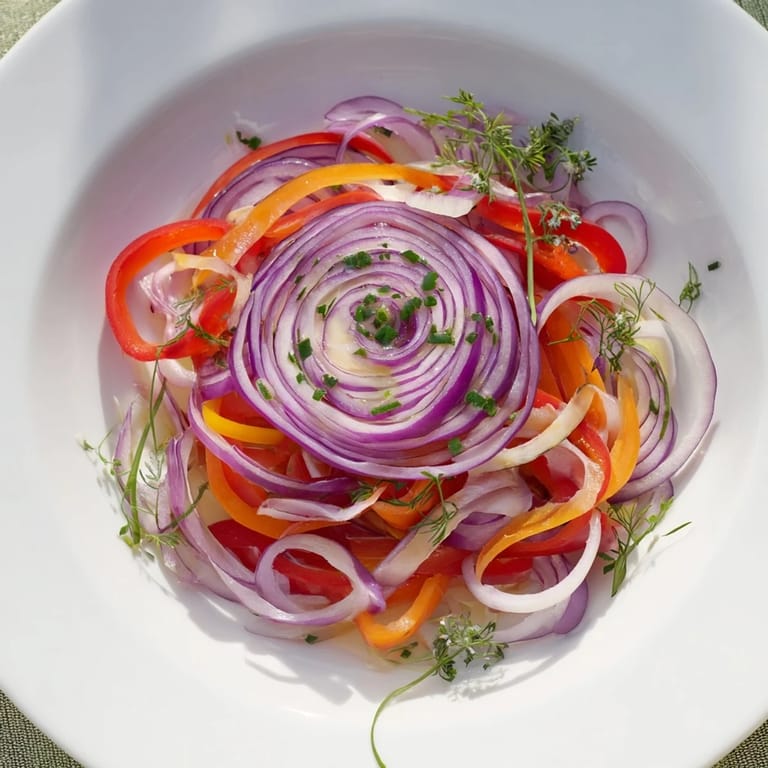
- Start from the center of your plate and spiral outward with the vegetable ribbons, overlapping them slightly and letting the edges tumble away from the center for that signature spinning effect. Think of it like a flower opening or a spiral staircase viewed from above.
- Add your herbs with intention:
- Scatter dill and chervil or parsley throughout, but concentrate the microgreens toward the outer edge where they'll catch the eye and create that wispy, unfinished feeling.
- Dress it just before serving:
- Drizzle the dressing over the top right as you bring it to the table so everything stays crisp and the herbs don't wilt from sitting too long with wet oil.
 Save
Save I learned the power of this salad when I made it for a friend going through a rough patch, and she told me later that seeing something that beautiful and effortless made her feel like the world still had lightness in it. That's when food stopped being just sustenance for me and became a small conversation, a moment of care I could put on a plate.
The Mandoline Matters
I spent years using a vegetable peeler and wondering why my salads looked like sad piles instead of something worth photographing, and then I invested in a proper mandoline slicer and everything changed. The consistency of the slices, the uniformity, the way they curl when chilled, all of it relies on having the right tool for the job. It's not fancy or complicated, but it's the difference between a good salad and one that makes people pause before they eat.
Playing with Color and Contrast
The visual impact of this salad comes from seeking out vegetables in different colors, which is why I hunt through farmers markets for golden beets instead of red ones, and rainbow carrots instead of the standard orange. When you layer orange, purple, yellow, and white vegetables in a spiral, you create something that looks almost abstract, and the flavor becomes secondary to the art for just a moment. Once someone tastes it though, the fresh, delicate flavors remind them why all that beauty actually serves the food.
Timing, Serving, and the Perfect Moment
This salad lives in a narrow window of perfection between being freshly chilled and starting to soften, which is why I always make it no more than thirty minutes before serving and why I dress it at the last possible second. The herbs stay brighter, the vegetables stay crisp, and the arrangement holds its shape the way it's meant to. There's a lesson here about not preparing everything too far in advance, about respecting the natural lifespan of delicate things and working with their timeline instead of against it.
- Serve this on your largest, most beautiful platter because the presentation is half the recipe.
- If your vegetables start to soften, a quick bath in ice water brings back some of the curl and crispness.
- This salad pairs beautifully with delicate proteins like grilled fish or alongside crusty bread for a light lunch.
 Save
Save This salad reminds me that sometimes the most impressive dishes are the ones that look complicated but are actually just about respect for simple ingredients and patience with the technique. Make this when you want to show someone care through the effort of arrangement and freshness.
Recipe FAQs
- → How do I achieve the thin, wispy vegetable ribbons?
Use a mandoline slicer or sharp vegetable peeler to shave the fennel, carrots, beet, and onion into thin, translucent ribbons for the best texture and appearance.
- → Why soak the shaved vegetables in ice water?
Soaking in ice water crisps the vegetable ribbons and helps them curl, enhancing both texture and visual appeal.
- → What herbs work best in this salad?
Fresh dill, chervil or parsley, and microgreens provide bright, aromatic flavors that complement the vegetables beautifully.
- → Can I prepare the salad in advance?
It's best to prepare just before serving to maintain the crispness and shape of the delicate vegetable ribbons.
- → What dressing enhances this salad's flavor?
A light dressing of extra-virgin olive oil, lemon juice, honey, and Dijon mustard balances freshness with subtle sweetness and tang.