 Save
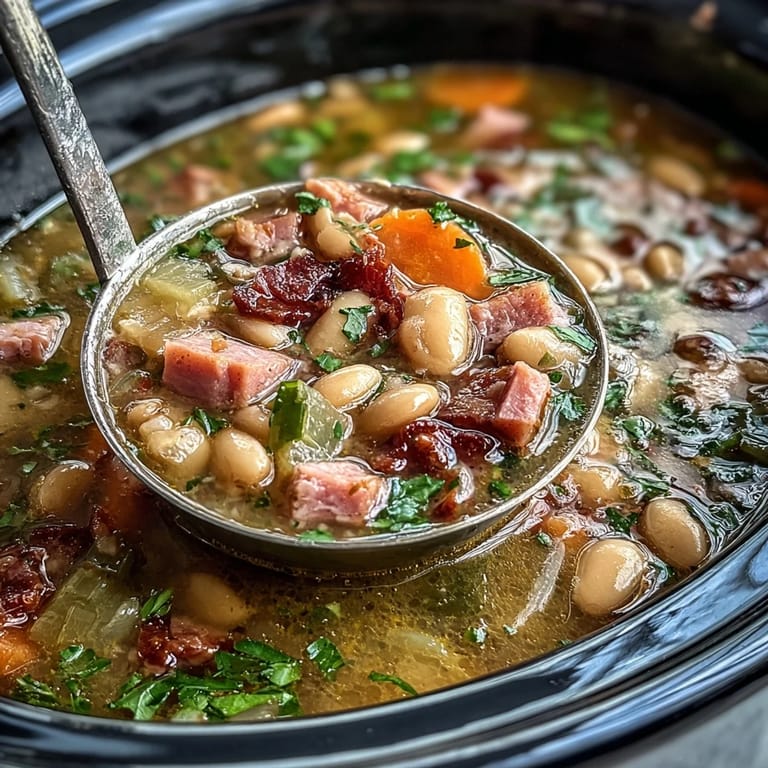
Save There's something almost magical about walking into the kitchen on a chilly afternoon and realizing the slow cooker has been quietly transforming simple ingredients into something deeply satisfying. This ham and bean soup emerged from one of those moments when I had leftover ham in the fridge and the kind of restless craving that only a big, steaming bowl could fix. The beauty of it is how little effort it demands upfront—just some chopping, a quick stir, and then hours of letting time do the heavy lifting while you go about your day.
I made this soup last December for my sister's surprise visit, and it turned out to be exactly what we needed—something warm and nourishing that let us sit at the table talking instead of me hovering over the stove. The house smelled incredible by the time she arrived, and we both had seconds while catching up on months of life.
Ingredients
- Cooked ham, diced (1 lb): Provides the soul of this soup, so use good quality ham if you can; the better the ham, the richer your broth becomes.
- Carrots, peeled and sliced (2 large): Their natural sweetness balances the saltiness of the ham and softens into silky strands after hours of cooking.
- Celery stalks, sliced (2): The classic vegetable trio wouldn't be complete without it, adding subtle aromatic depth that's almost impossible to pinpoint but absolutely missed if you skip it.
- Yellow onion, diced (1 medium): Becomes translucent and sweet, practically dissolving into the broth and building the flavor foundation.
- Garlic, minced (3 cloves): Three cloves gives you enough presence without overpowering the delicate beans; add an extra clove if you're a garlic devotee.
- Cannellini or great northern beans, drained and rinsed (2 cans): These pale, buttery beans absorb the ham's smokiness and create a naturally creamy texture without any cream.
- Low-sodium chicken broth (6 cups): Go with low-sodium so you're in control of the final salt level; you can always add more flavor, but you can't take it back.
- Bay leaf (1): Contributes a subtle earthiness that ties everything together, but remember to fish it out before serving.
- Dried thyme (1 tsp): Warming and herbaceous, it whispers through every spoonful without shouting.
- Dried parsley (1 tsp): Adds a gentle vegetal brightness and a hint of freshness at the end.
- Black pepper (½ tsp): Start with this amount; you can always grind more into your bowl.
- Salt, to taste: The ham brings salt, so taste before adding more—this is your final adjustment.
Tired of Takeout? 🥡
Get 10 meals you can make faster than delivery arrives. Seriously.
One email. No spam. Unsubscribe anytime.
Instructions
- Gather and prep your vegetables:
- Peel your carrots, slice them into half-moons about a quarter-inch thick, and do the same with the celery. Dice the onion into bite-sized pieces and mince the garlic; these prep moments, done while your slow cooker sits waiting nearby, set you up for the easiest part of cooking.
- Build your soup base:
- Into the slow cooker goes the diced ham, followed by all your prepped vegetables and the drained beans. Pour in the broth, then add the bay leaf, thyme, parsley, and black pepper, stirring everything together so the seasonings distribute evenly.
- Let it cook low and slow:
- Cover the slow cooker and set it to low for 7 hours, which allows the vegetables to become completely tender and all the flavors to marry into something greater than their individual parts. If you're in a rush, high for 3 to 4 hours works, though the long cook deepens everything.
- Finish and adjust:
- Once the vegetables are fork-tender, remove that bay leaf, taste a spoonful, and add salt until it tastes right to you. Some of the beans will have softened so much they're practically disintegrating, which is exactly what you want.
- Serve with intention:
- Ladle into bowls and set out crusty bread or crackers alongside; let people dip and soak and make this meal their own.
 Save
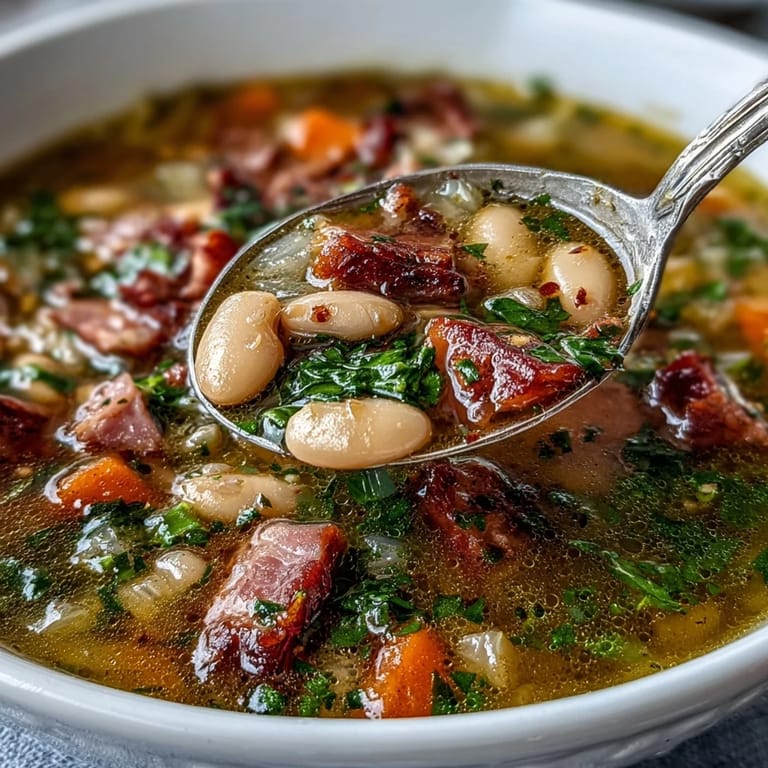
Save What strikes me most about this soup is how it transforms ordinary pantry staples into something that feels like genuine comfort, the kind of meal that makes people linger at the table a little longer. It's become the dish I reach for when I want to feed people without stress, and it never disappoints.
Making It Thicker or Thinner
The consistency of your finished soup really depends on personal preference and how long you let it cook. If you like it brothy and light, leave it as is; if you prefer something heartier and more stew-like, you have options. Mashing a handful of the cooked beans creates a creamy texture without any dairy, or you can let it cook uncovered for the last hour to let some liquid evaporate naturally.
Variations and Add-Ins
This soup is wonderfully forgiving and adapts beautifully to what you have on hand. Spinach or kale can be stirred in during the last 30 minutes of cooking, adding iron and color without changing the core character of the dish. Diced potatoes add heartiness, or you could swap the ham for smoked turkey if that's what you're working with.
Storing and Reheating
This soup actually tastes better the next day, after the flavors have settled and deepened overnight in the refrigerator. It keeps beautifully for up to four days in a sealed container, and reheats gently on the stovetop over medium heat, thinning with broth if it's thickened too much during storage.
- Freeze it in individual portions for quick weeknight dinners up to three months ahead.
- Let it come to room temperature before refrigerating to avoid temperature shock to your fridge.
- If it thickens significantly when cold, don't worry—just add broth or water as you reheat.
 Save
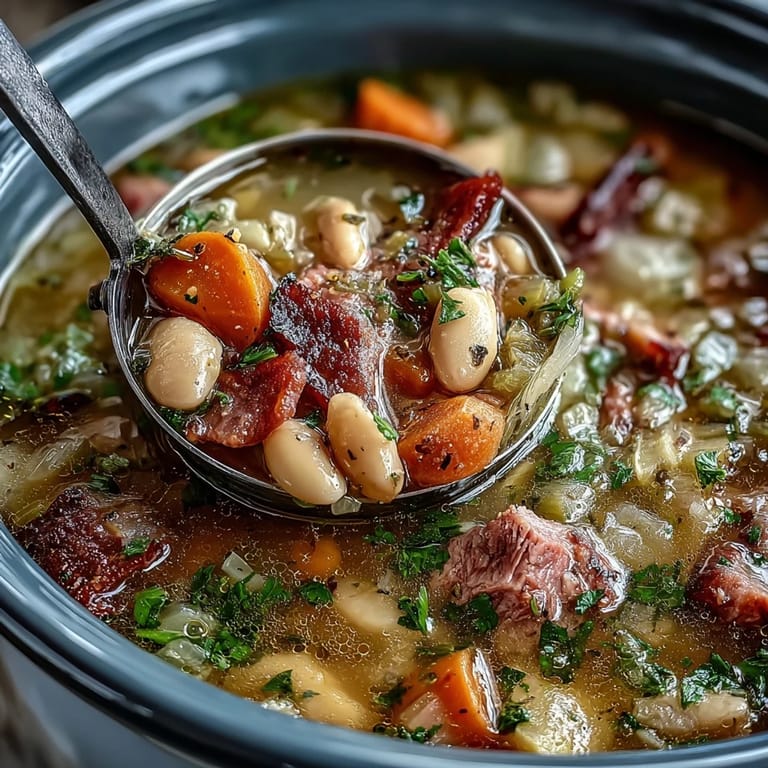
Save This soup reminds me why slow cookers exist—to make feeding yourself and others feel effortless and genuinely nourishing. Make it once, and you'll find yourself coming back to it whenever you need something real.
Recipe FAQs
- → Can smoked ham hocks be used instead of diced ham?
Yes, smoked ham hocks add a smoky depth. Remove bones and shred the meat before serving for best texture.
- → How can I thicken the soup?
Mash a portion of the beans before stirring them back in to create a thicker, creamier consistency.
- → When should I add leafy greens like spinach or kale?
Add chopped spinach or kale during the last 30 minutes of cooking to keep them tender yet vibrant.
- → Is chicken broth necessary for this dish?
Chicken broth provides a flavorful base, but vegetable broth can be used as an alternative for a lighter taste.
- → What is the best way to prepare the vegetables?
Peel and slice the carrots, slice celery stalks, dice the onion, and mince the garlic evenly to ensure consistent cooking.