 Save
Save The first time I saw a modernist stripe on a restaurant plate, I was mesmerized—not by complexity, but by the quiet confidence of it. One bold line of color, nothing wasted, everything intentional. I went home that night and thought about how different cooking could feel when you stripped away the noise. The stripe became my obsession, and I realized that sometimes the most striking dishes come from deciding what to leave out, not what to pile on.
I made this for a dinner party where everyone was tired of fussy plating, and I wanted to prove that restraint could be more dramatic than abundance. When I set that single striped board in the center of the table, the silence that followed told me everything. People leaned in like they were studying something precious, and then they ate it with their hands, right from the board, the way I'd hoped they would.
Ingredients
- Beets (2 medium, peeled and diced): The foundation of your stripe—earthy, sweet, and that impossible magenta that stops people mid-conversation.
- Olive oil (1 tbsp for beets): Just enough to help them caramelize and collapse into silky submission.
- Sea salt (1/4 tsp for beets, plus more for finishing): Amplifies the beet's natural sweetness in ways you won't see coming.
- Lemon juice (1 tsp): Cuts through richness and keeps the beet purée from feeling heavy on the tongue.
- Carrots (3 large, peeled and sliced): Your second stripe—bright, naturally sweet, and the perfect textural contrast.
- Fresh ginger (1 tsp grated): A whisper of heat that makes people pause and ask what that is.
- Unsalted butter (1 tbsp, or olive oil if vegan): Makes the carrot purée taste like velvet, not just mush.
- Sea salt (1/4 tsp for carrots): Brings the ginger forward without overwhelming it.
- Ripe avocado (1): Your pale, creamy crown—choose one that yields just slightly to pressure, nothing mushy.
- Greek yogurt (2 tbsp, or coconut yogurt for vegan): The binding agent that makes the avocado spread like a dream instead of clumping.
- Lime juice (1 tsp): Keeps avocado bright and adds a hint of sharpness that makes everything pop.
- Microgreens, edible flowers, crushed pistachios, and flaky sea salt: These aren't garnish—they're the exclamation point.
Tired of Takeout? 🥡
Get 10 meals you can make faster than delivery arrives. Seriously.
One email. No spam. Unsubscribe anytime.
Instructions
- Roast the beets with intention:
- Heat your oven to 400°F and toss diced beets with olive oil and salt, then spread them on a baking tray. They'll take 30–35 minutes to surrender completely, filling your kitchen with an earthy sweetness that makes you feel like you're actually cooking something real. You'll know they're ready when a fork slides through like butter.
- Steam the carrots to tender glory:
- While beets roast, steam or boil your carrot slices for 15–20 minutes until they're so soft they almost fall apart. Let them cool just enough to handle—warm carrots blend into silk, cold ones turn grainy and stubborn.
- Blend the beet stripe:
- Put your roasted beets and lemon juice into the blender and pulse until absolutely smooth, adding a splash of water only if needed. You want thick, spreadable purée, not soup—stop when it looks like it could hold a shape.
- Create the carrot layer:
- Blend your cooled carrots with ginger, butter, and salt until silky. The ginger should vanish into the background, whispering rather than shouting.
- Make the avocado cream:
- In a small bowl, mash your ripe avocado by hand until it's smooth but still has a little personality, then fold in the yogurt, lime juice, and a pinch of salt. Transfer this to a piping bag or squeeze bottle—precision matters here.
- Build your stripe:
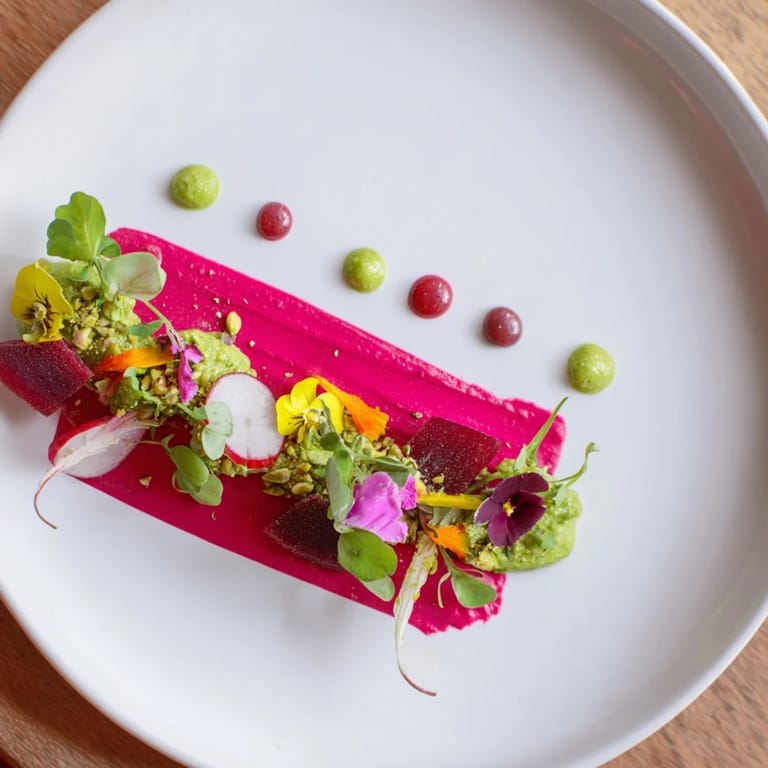
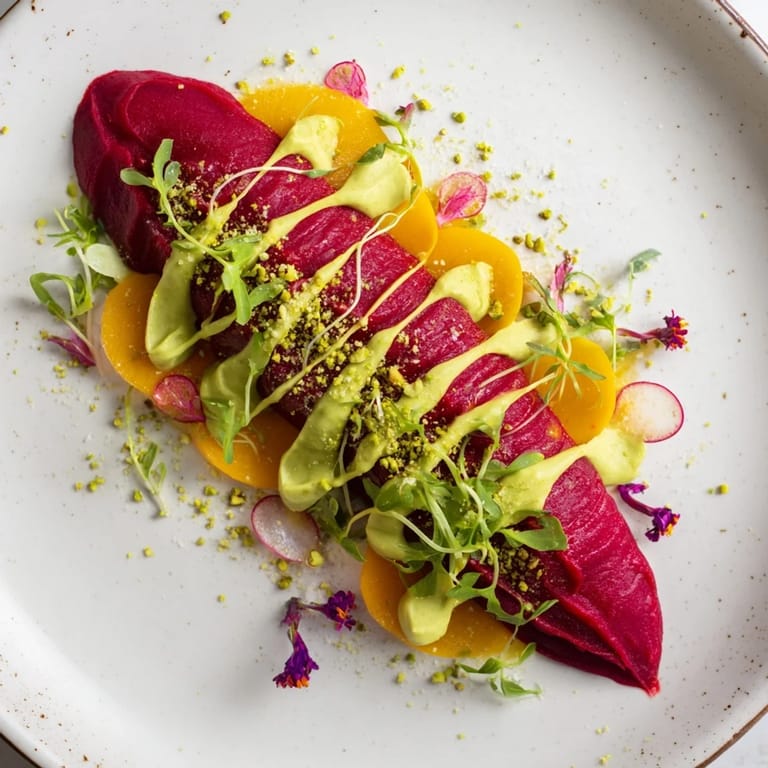
- On a clean, empty board, use an offset spatula or the back of a large spoon to drag the beet purée down the center in one thick, confident line, about 3 inches wide. This is the moment where you commit to the gesture—no second-guessing, just one smooth motion.
- Layer with intention:
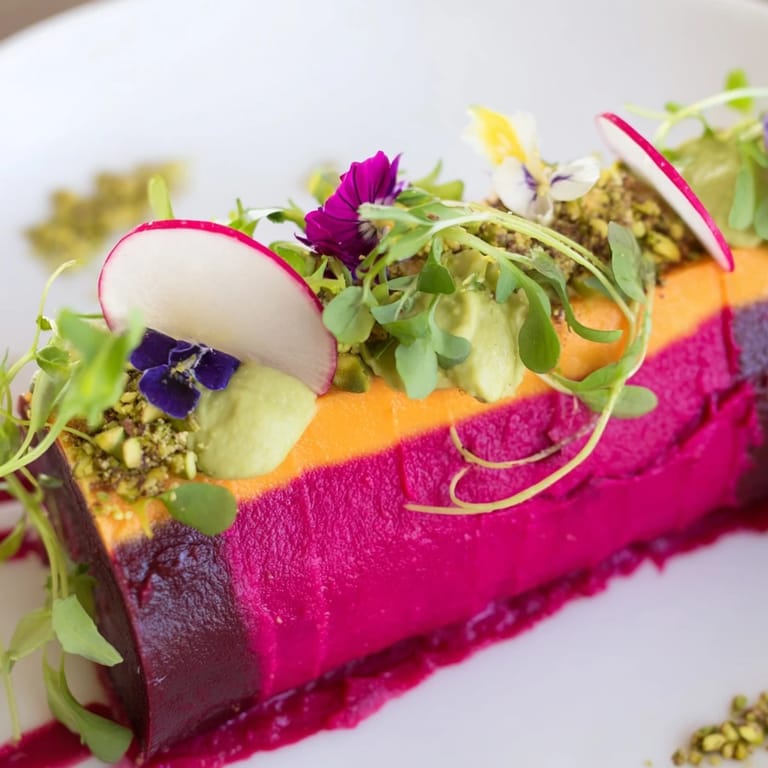
- Pipe or spread the carrot purée and avocado cream in artistic strokes or deliberate dots along the beet stripe, creating depth and rhythm. Think about how your eye will travel across it.
- Finish with personality:
- Scatter microgreens, edible flowers, and crushed pistachios across the stripe, then finish with a sprinkle of flaky sea salt. Every element should have its own little moment.
- Serve and watch:
- Bring it to the table immediately and encourage people to scoop directly from the stripe with whatever they're eating—crackers, bread, their own fork. The interaction is part of the dish.
 Save
Save There's a moment when the last garnish falls into place and you step back from the board. Something shifts—you're no longer looking at ingredients, you're looking at a moment. That's when you know it's ready.
Why This Stripe Works
The modernist stripe doesn't try to be everything at once. It commits to one direction, one story, one clean line. In a world of food noise—towers, foam, scattered elements—a single, bold stripe feels almost rebellious. It's not minimal because it's easy; it's minimal because we've decided that every element earns its place. The beet is sweet and earthy, the carrot is bright and spiced, the avocado is creamy and alive. Together, they don't compete for attention; they pass it along like a conversation. When someone looks at this dish, they're not counting components or guessing at technique—they're feeling something.
Playing with Your Palette
Once you've made one stripe, you'll start seeing others everywhere. Sweet potato purée instead of beet. A pea green instead of carrot. Roasted squash, charred celery root, even a deep purple from red cabbage if you're feeling bold. The structure stays the same, but the story changes. I've made versions for every season—spring stripes are pale and fresh, autumn stripes lean into roasted warmth, winter stripes go deeper and earthier. Each one teaches you something about flavor and color that you can't learn from a textbook.
The Ceremony of Plating
This is where the quiet confidence comes in. The stripe demands a clean board, a steady hand, and a moment of stillness before you arrange anything. I plate this when I'm unhurried, when I can focus on the single line without distraction. It's meditation disguised as cooking, and by the time the garnish is scattered, you'll understand why this style of plating became so seductive. There's beauty in the white space around the stripe, beauty in the geometric simplicity, beauty in the restraint.
- Use the whitest, cleanest board you have—the contrast is everything.
- If the beet purée cracks or drips as you spread it, that's part of the texture, not a mistake.
- Plate this last, right before service, or the avocado will oxidize and the microgreens will wilt.
 Save
Save When you serve this, you're not just serving food—you're sharing a moment of clarity, a reminder that sometimes less truly is more. That's what makes you come back to it again and again.
Recipe FAQs
- → How do you achieve smooth purées?
Roast or steam vegetables until tender, then blend with small amounts of liquid to reach a silky texture.
- → What garnishes complement layered vegetable purées?
Microgreens, edible flowers, crushed pistachios, and flaky sea salt add texture, color, and flavor contrast.
- → Can this dish be made vegan?
Yes, substitute dairy yogurt and butter with plant-based alternatives like coconut yogurt and olive oil.
- → What tools help create the stripe effect?
Use an offset spatula or the back of a large spoon to spread purées cleanly in thick stripes.
- → How to add extra texture to the presentation?
Incorporate roasted chickpeas or pickled onions as garnishes to enhance crunch and flavor depth.