 Save
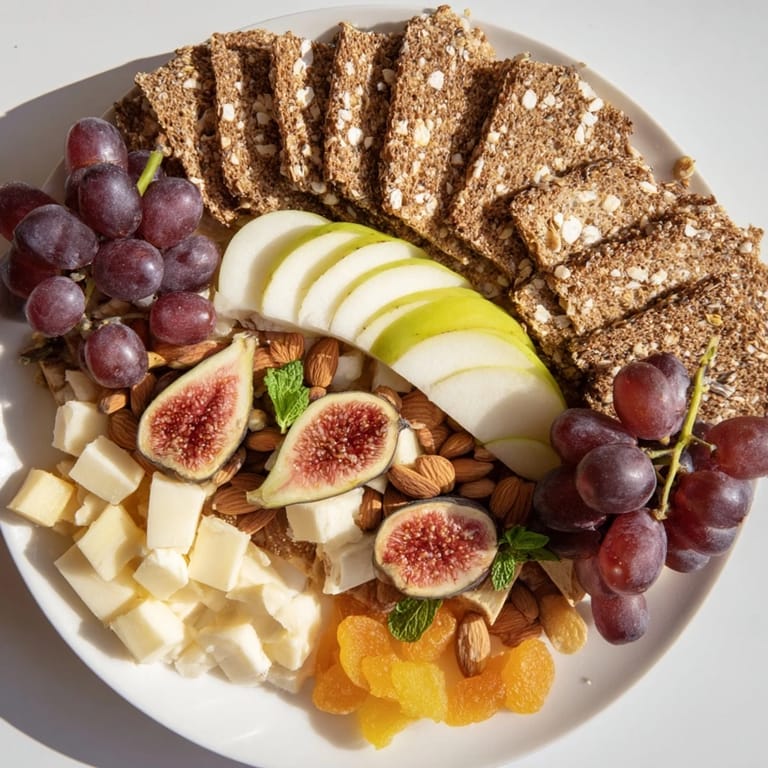
Save There's something about standing in a farmers market in late September, surrounded by the kind of abundance that makes you want to gather everything at once, that inspired this platter. I watched someone arrange stone fruits and bread on a wooden board and thought, wouldn't it be beautiful to make something that looked like a harvest landscape? The Harvest Scythe was born from that moment—a celebration of grain, fruit, and bread arranged not as separate elements, but as a scene.
I made this for my cousin's birthday picnic last year, and what struck me wasn't the praise (though there was plenty)—it was watching a five-year-old pick through it thoughtfully, assembling her own tiny combinations of grape and baguette, dried apricot and nut. That's when I realized it wasn't just food; it was an invitation to play with flavors.
Ingredients
- Sliced baguette: Use a bread knife with a gentle sawing motion to avoid crushing the crumb, and don't slice too thin or they'll curl at the edges.
- Multi-grain crackers: These add textural contrast and hold their crunch longer than soft breads—choose ones with visible seeds if you can find them.
- Seeded rye bread: Slice it thin enough to pair with cheese but thick enough that it won't tear; rye's earthy flavor anchors the sweetness of fruit beautifully.
- Cooked farro or barley: Let it cool completely and fluff it with a fork before arranging so each grain is visible and separate, not clumped.
- Seedless red grapes: They're naturally sweet and stay firm on a platter without weeping juice, which means your breads won't get soggy.
- Sliced pears and apples: Toss these gently with a squeeze of lemon juice to prevent browning and add a whisper of brightness that no one will consciously taste but everyone will feel.
- Dried apricots: Their concentrated sweetness is a bridge between fresh fruit and cheese, especially aged cheddar.
- Fresh figs: If you find them, buy them—they're the luxury item that makes this platter feel special, but dried figs work beautifully when fresh ones aren't in season.
- Brie and aged cheddar: Slice the brie while it's slightly cool so it cuts cleanly, and cube the cheddar small enough that it feels approachable, not intimidating.
- Honey or fig jam: A drizzle transforms the experience from snack to indulgence, especially when it catches the light on a white plate.
- Fresh mint and roasted nuts: Mint brightens everything and signals freshness; nuts add warmth and crunch that makes people want another bite.
Tired of Takeout? 🥡
Get 10 meals you can make faster than delivery arrives. Seriously.
One email. No spam. Unsubscribe anytime.
Instructions
- Set your stage:
- Choose a wooden board or ceramic platter that's large enough to feel generous—this isn't about cramped efficiency, it's about abundance. A board about 18 to 24 inches across gives you room to create something with movement and rhythm.
- Create the scythe's sweep:
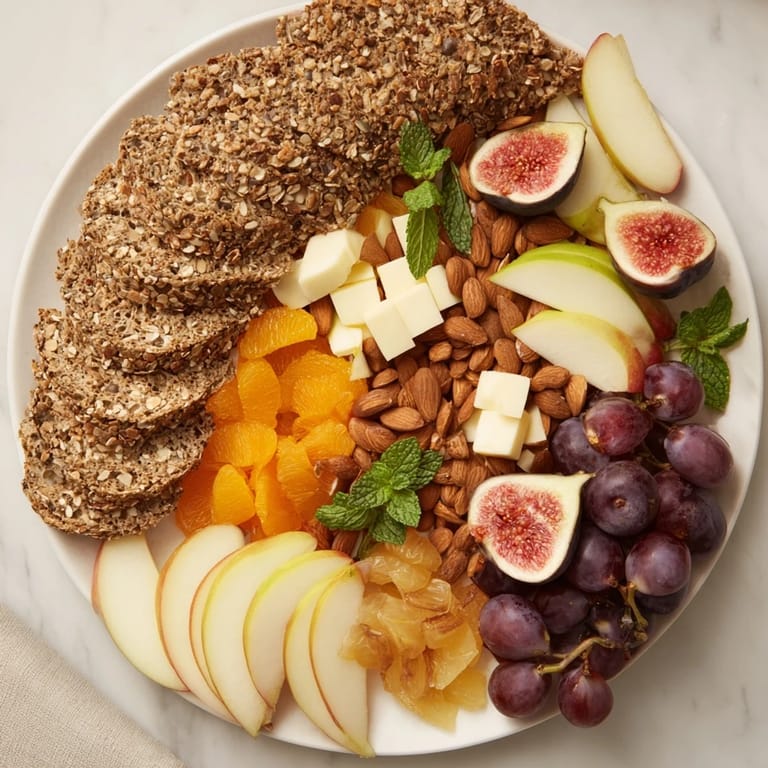
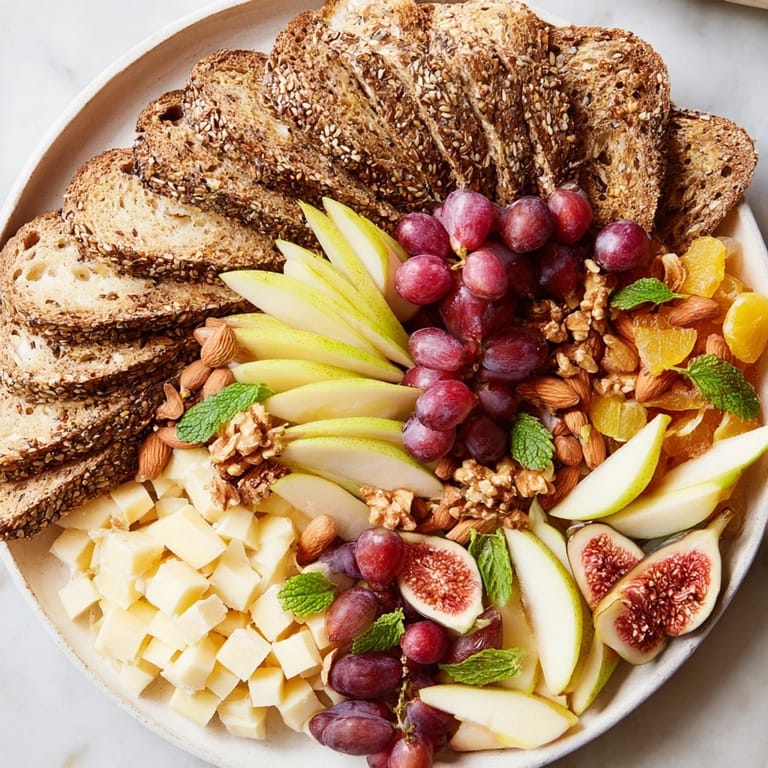
- Arrange sliced breads and crackers in a flowing, curved line that moves across the board like you're drawing with your hands. Vary the types and angles so the line feels organic, not geometric.
- Build the grain field:
- Along the inner curve of your bread arc, spread the cooled farro or barley in a gentle layer. Run your fingers through it lightly so you see individual grains catching the light—this is where the landscape comes alive.
- Fan and flow the fruit:
- Place apple slices and pear slices in overlapping fans, letting colors and textures weave between the breads and grains. Scatter grapes in clusters, tuck apricots and figs into gaps—think of it as planting, not placing.
- Anchor with cheese:
- Group the brie slices and cheddar cubes in rustic clusters near the breads, creating little moments of calm in an otherwise abundant scene. They should feel like they belong there, not like an afterthought.
- Add the liquid gold:
- Pour honey into a small bowl and place it along the edge where it's easy to reach—or drizzle it sparingly across the top if you're feeling confident. Some people want a dipping vessel; others prefer the surprise of sweetness already there.
- Finish and serve:
- Scatter fresh mint leaves across the platter and let roasted nuts fall where they will, creating texture and aroma. Bring it to the table immediately so the fruits are cool and the bread still holds its structure.
 Save
Save What I didn't expect was how this platter would become a conversation starter, the way people would linger over it, moving things around on their plates, discovering combinations they didn't know they wanted. It stopped being about hunger and became about joy.
The Art of Arrangement
The beauty of this platter is that it doesn't require perfection—in fact, perfection would ruin it. The most stunning versions I've made have been the messiest, where bread angles differ, where colors aren't balanced symmetrically, where you can see the hand that placed each thing. Resist the urge to arrange it like a grid; instead, think of it as choreography. Each element should feel like it led to the next, creating rhythm rather than order.
Timing and Temperature
Because nothing here is cooked, temperature becomes texture, and timing becomes freshness. A cold baguette tastes different from room temperature bread—one feels crisp and delicate, the other feels substantial and grounding. My favorite version happens when I slice the bread just before arranging, when steam is still escaping. Similarly, fruit pulled from the fridge brings coolness that plays beautifully against warm honey or jammy cheese. If you're serving this at a gathering, assemble it no more than two hours before people arrive, and keep it out of direct sunlight so the fruits don't lose their jewel-like appearance.
Making It Your Own
This platter is a foundation, not a formula. I've made versions with roasted chickpeas instead of nuts, with fresh berries instead of grapes, with whipped ricotta replacing brie. The constant is the combination of textures and the visual narrative—bread, grain, and fruit telling a story together. Winter versions lean into dried fruits and sturdy cheeses; summer versions explode with stone fruits and bright herbs.
- Swap seasonal fruits freely—plums, nectarines, and blackberries work beautifully depending on the time of year.
- Try spiced nuts or dukkah sprinkled over the top for unexpected depth and earthiness.
- Add a small wedge of aged gouda or blue cheese if you want the platter to feel more savory and sophisticated.
 Save
Save This platter is an act of generosity—not because it takes effort, but because it says you wanted to create something beautiful for people to share. That's the real harvest.
Recipe FAQs
- → What breads work best for this platter?
Small baguettes, seeded rye, and multi-grain crackers offer a range of textures and flavors that complement the fruit and grains beautifully.
- → Can I substitute the grains used?
Yes, farro or barley work well cooked and cooled, but you can swap in quinoa or other cooked whole grains depending on preference.
- → How should the fruits be prepared?
Fruits like apples and pears should be thinly sliced to allow for easy eating and to balance the platter visually. Grapes and figs can be presented whole or halved.
- → Are the cheeses necessary for this spread?
Cheeses like brie and aged cheddar add creamy, sharp notes but can be omitted or substituted with plant-based alternatives for dietary needs.
- → What garnishes enhance flavor and presentation?
Fresh mint leaves add a refreshing aroma, while roasted nuts provide crunch and depth, enhancing both taste and texture.
- → How should the platter be served for best freshness?
Serve immediately after assembling to preserve the fresh textures and flavors of the bread and fruits without any sogginess.