 Save
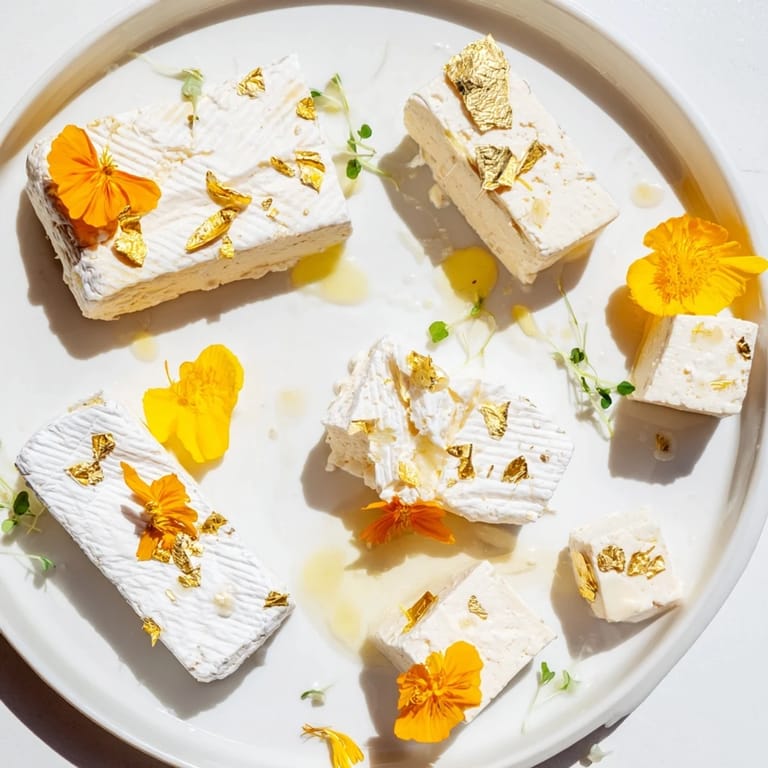
Save There's something about a cheese board that makes people pause and actually look at what they're eating. I'd been arranging cheeses on plain white plates for years when a friend brought one to a dinner party draped in gold leaf and scattered with edible flowers, and I watched everyone lean in closer, their eyes lighting up before they even tasted anything. That's when I realized that the most memorable appetizers aren't always about complicated technique—they're about a moment of quiet luxury. This gilded lily is my love letter to that idea: simple, elegant, ready in fifteen minutes, and completely unforgettable.
I made this for my sister's engagement party on a Saturday afternoon when everything felt both terrifying and beautiful, and I remember her picking up a piece of brie with a single gold leaf clinging to it, grinning like she'd just discovered treasure. The platter sat in the center of the table untouched for a full minute while people took photos, and that hesitation—that respect for something beautiful—felt like the whole point.
Ingredients
- Goat cheese log (chèvre), 150 g: Tangy and spreadable, this is your creamy anchor; the slight funk pairs beautifully with honey and petals.
- Triple-cream brie, 150 g: Buttery and rich, it's the kind of cheese that makes people close their eyes when they taste it.
- Fresh ricotta, 150 g: Mild and delicate, ricotta acts as a blank canvas for the gold and flowers to really shine.
- Feta block, 150 g: Crumbly and salty, this gives the platter contrast and keeps things from feeling one-note.
- Edible gold leaf, 1–2 sheets: This is the whole reason people gasp; buy it from a reputable supplier and use tweezers to avoid fingerprints.
- Yellow edible flower petals, 2 tbsp: Marigold, calendula, or chrysanthemum work beautifully; they're visual magic and taste faintly floral, never overpowering.
- Honey, 2 tbsp: Optional but transformative—it adds sweetness and creates a visual shimmer.
- Baguette and crackers: These are your vehicles; choose good bread and varied textures in your crackers.
Tired of Takeout? 🥡
Get 10 meals you can make faster than delivery arrives. Seriously.
One email. No spam. Unsubscribe anytime.
Instructions
- Arrange with intention:
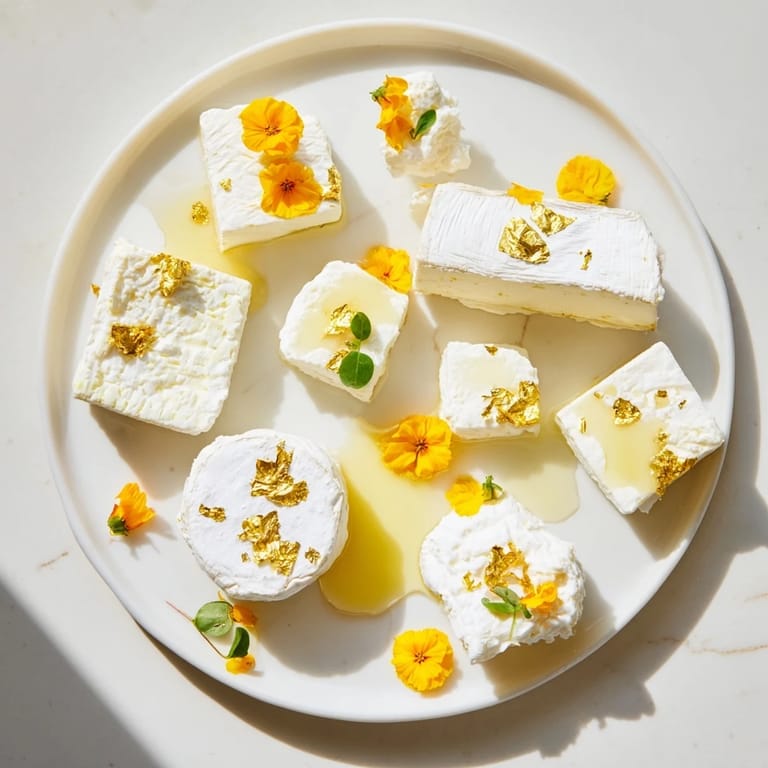
- Place each cheese on your platter with space around it, creating visual breathing room. Think of it like setting a stage where each player gets their moment.
- Apply gold with patience:
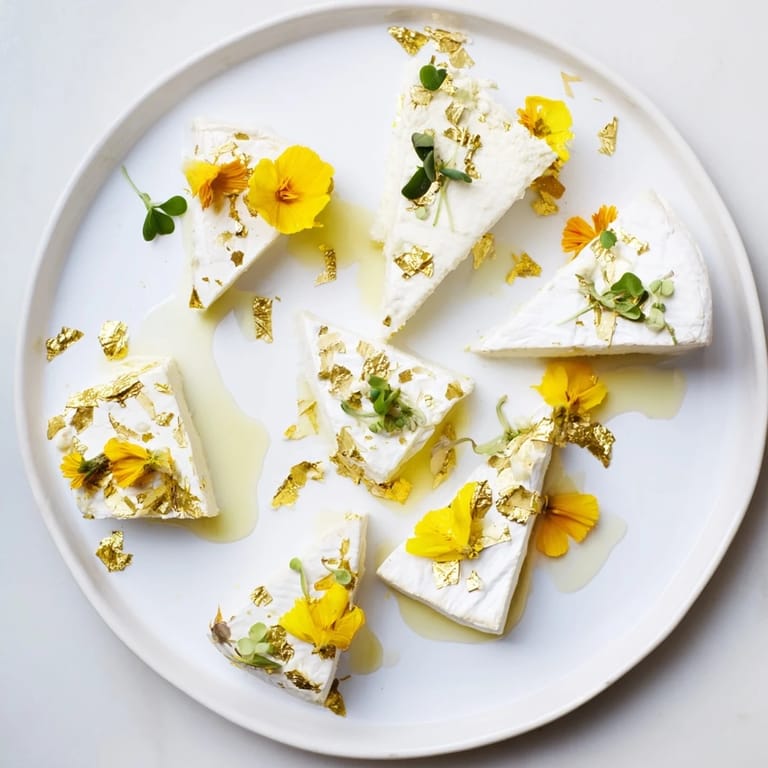
- Use tweezers or a fine, clean brush to press small pieces of gold leaf onto each cheese surface; it's delicate but forgiving, and the imperfections actually look more artisanal.
- Scatter the petals:
- Let yellow flowers fall naturally over and around the cheeses—precision here works against you; aim for a gentle, organic feeling.
- Add honey and herbs:
- If using honey, drizzle it over the goat cheese or ricotta where it'll pool slightly and catch light. Microgreens add height and contemporary flair.
- Finish and serve:
- Arrange sliced baguette and crackers around the platter in relaxed clusters. This board is meant to be admired for a moment before diving in.
 Save
Save What I've learned about beautiful food is that it gives people permission to feel special, to celebrate a moment as something worth marking. This platter does that in the simplest way possible.
Choosing Your Cheeses
The magic here lives in contrast—creamy against crumbly, mild against salty, white against the gold and flowers. Goat cheese brings tang, brie brings richness, ricotta brings delicacy, and feta brings structure. If you can't find one of these, swap it for another white cheese you love, but try to keep the textures varied. The platter should reward different moods and moments of hunger.
The Gold Leaf Question
Edible gold leaf tastes like nothing—it's pure visual theater, and that's exactly why it works. It catches light, it signals celebration, it makes people feel like they've wandered into someplace special. Buy the thinnest sheets you can find; they're easier to handle and look more elegant. When you apply them, have a damp cloth nearby to wipe your tweezers between applications so bits don't stick where they shouldn't.
Flowers and Flavor
Edible flowers aren't garnish pretending to be flavor—they're actual taste, though gentle. Calendula brings a subtle peppery warmth, marigold tastes slightly citrusy, chrysanthemums are nearly neutral with a whisper of bitterness. Scatter them freely over cheese and platter alike; they're delicate enough not to overpower anything but bold enough to matter. The colors—those deep golden yellows—create a warmth that makes the whole arrangement feel intentional and luxurious.
- Buy flowers from specialty food suppliers where they're grown specifically for eating, never from florists.
- If you can't source edible flowers, microgreens in yellow-green shades work beautifully as a substitute.
- Add flowers just before serving so they stay fresh and vibrant.
 Save
Save This board is proof that elegance doesn't require hours in the kitchen. It's about seeing ordinary ingredients and honoring them with intention.
Recipe FAQs
- → How do I apply edible gold leaf to cheese?
Use clean tweezers or a fine brush to gently place small pieces of gold leaf onto the surface of the cheeses. Handle carefully as it is delicate and fragile.
- → Which cheeses work best for this platter?
Soft, creamy white cheeses like goat cheese, triple-cream brie, fresh ricotta, and block-style feta provide ideal textures and flavors.
- → Are the flower petals safe to eat?
Yes, only use edible flowers such as marigold, calendula, or chrysanthemum sourced from reputable suppliers to ensure safety.
- → Can I make a vegan version?
Substitute plant-based white cheeses and omit honey to accommodate vegan preferences while maintaining style.
- → What pairings enhance this dish?
Serve with sliced baguette or gluten-free crackers and consider a chilled glass of Champagne or crisp Sauvignon Blanc for balance.