 Save
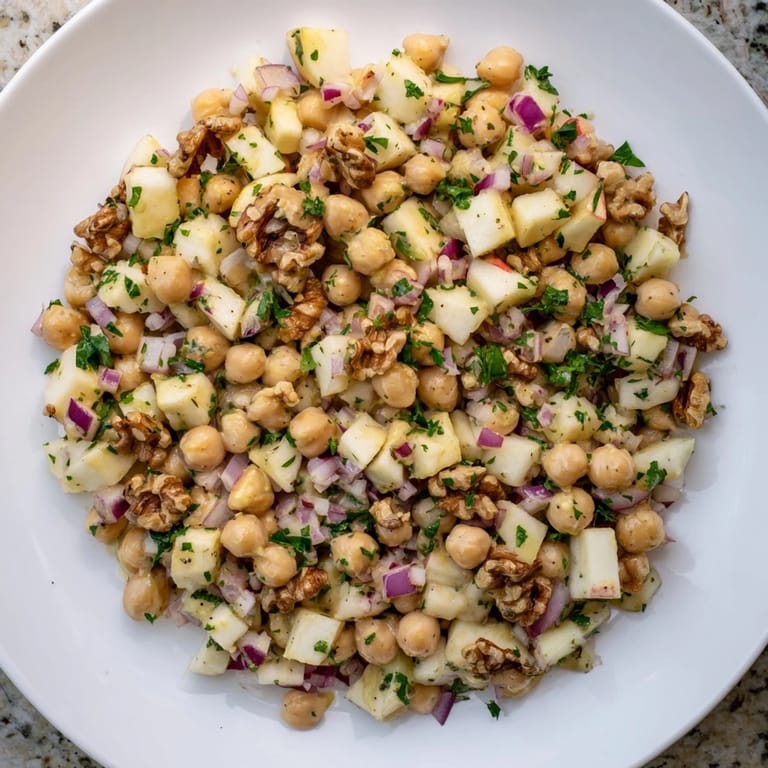
Save There's something about October that makes me crave salads nobody expects me to eat cold. I was standing in my kitchen one afternoon, staring at a bag of apples from the farmers market and a forgotten can of chickpeas I'd bought with good intentions, when it hit me—what if I stopped thinking of fall ingredients as something to roast and instead let them shine raw? This salad became my answer to that question, and it's the one I now make every single time I need to remind myself that lunch doesn't have to be complicated to feel special.
I made this for a potluck once where everyone showed up with casseroles, and mine was the first thing that disappeared. A friend asked why I didn't write it down, and I realized in that moment how many recipes live only in the space between muscle memory and intuition. That day, watching people go back for thirds, I learned that sometimes the simplest dishes matter the most.
Ingredients
- Chickpeas (1 can, 15 oz): Drain and rinse them well—this removes the starchy liquid that can make your salad soggy and metallic-tasting.
- Apples (2 medium): Honeycrisp or Gala work best because they're crisp and hold their shape; toss them with a squeeze of lemon juice right after dicing if you're not assembling immediately.
- Walnuts (1/2 cup, chopped): The toasty, bitter edge they bring is non-negotiable—they're what keeps this from tasting too sweet.
- Red onion (1/4 cup, finely diced): Its sharp bite mellows slightly as it sits in the dressing, becoming almost gentle by the time you eat it.
- Fresh parsley (2 tablespoons): This is the green that tastes like brightness; skip it and the salad loses something you can't quite name.
- Olive oil (3 tablespoons): Use something you like the taste of, because it's going to be tasted directly.
- Dijon mustard (1 1/2 tablespoons): The sharpness is what makes the dressing memorable instead of just sweet.
- Honey (1 1/2 tablespoons): Drizzle it slowly when whisking—it integrates better than if you dump it all at once.
- Apple cider vinegar (1 tablespoon): This specific vinegar tastes like what you're already eating, creating a kind of flavor conversation.
- Salt and pepper (1/4 teaspoon each): Taste as you go; the apples can make you uncertain about whether you need more salt than you actually do.
Tired of Takeout? 🥡
Get 10 meals you can make faster than delivery arrives. Seriously.
One email. No spam. Unsubscribe anytime.
Instructions
- Prep your vegetables with intention:
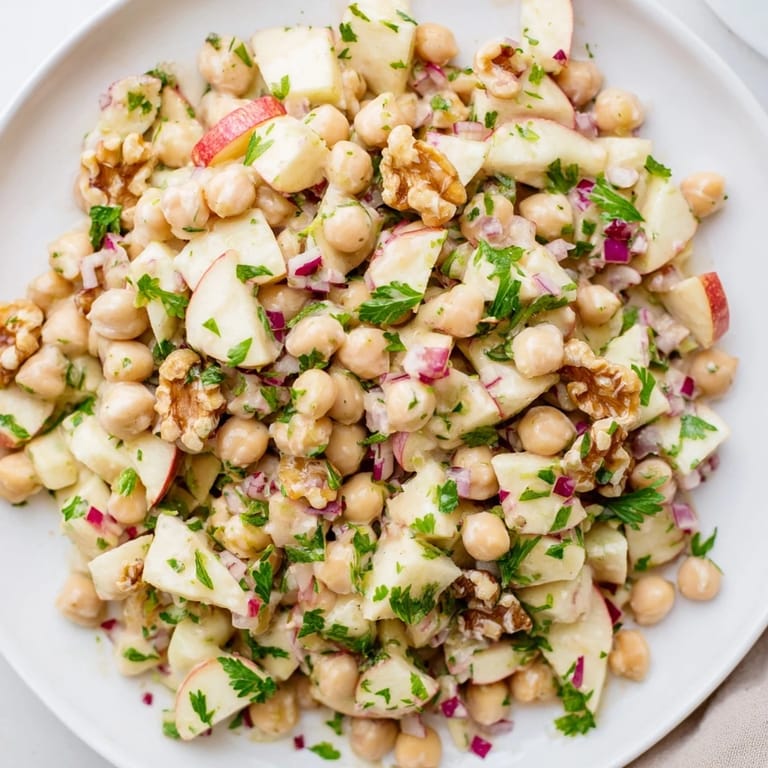
- Dice the apples into roughly the same size as your chickpeas so every bite feels balanced. Chop the walnuts with your hands if you can—the pieces will be more interesting than if you use a food processor, which tends to turn them into dust.
- Build the salad base:
- Combine the chickpeas, apples, walnuts, red onion, and parsley in a large bowl. At this point it's just ingredients sitting together, nothing holding them as one yet.
- Make the dressing in a jar or small bowl:
- Add the olive oil, mustard, honey, vinegar, salt, and pepper. If you're using a jar, cap it and shake hard—the emulsion comes together best with vigorous movement, and there's something satisfying about the sound of it working.
- Bring it all together:
- Pour the dressing over the salad and toss gently until everything glistens evenly. This is the moment it transforms from a collection of ingredients into something whole.
- Taste and adjust:
- This matters more than you might think. Sometimes an apple is sweeter than you expected, or your honey was heavier-handed. Trust your mouth.
 Save
Save There was a season when I made this three times a week, each time slightly different depending on what apples looked best at the store or whether I had parsley left or had to use cilantro instead. It became less like following a recipe and more like speaking a language I'd started to understand. That's when I knew it had become mine.
The Apple Question
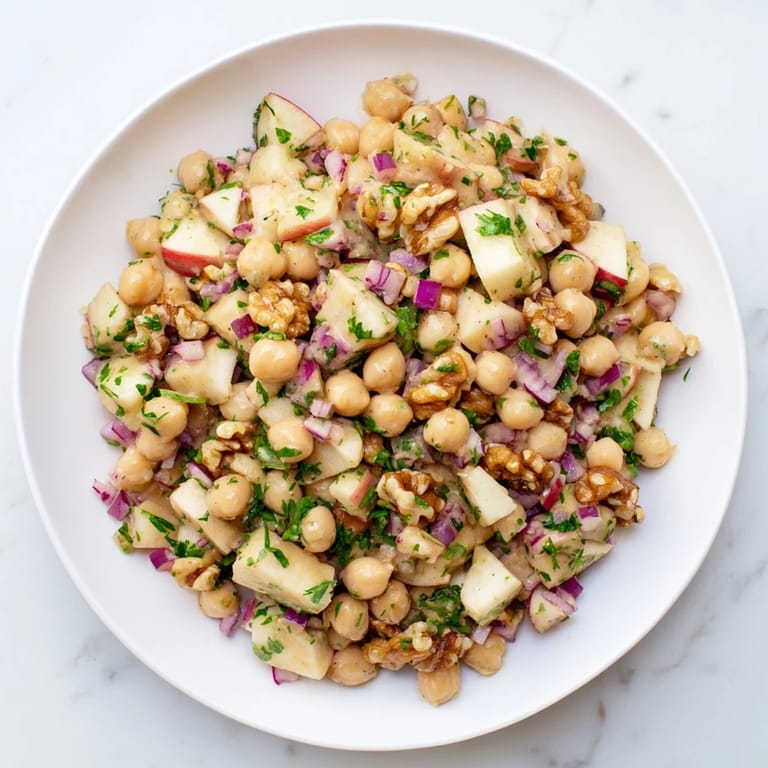
The type of apple matters more than you'd think. Honeycrisp and Gala are ideal because they're crisp enough to stay that way after sitting in dressing, and they have a natural sweetness that plays well with the mustard. Granny Smith will work too if you like your salad more tart, but avoid Red Delicious or anything mealy—you'll taste the difference immediately. I learned this by making the salad with whatever apples were on sale and realizing partway through chewing that I'd made a mistake.
Why This Dressing Works
The honey-mustard combination is less obvious than vinaigrettes, but it's smarter. The mustard's sharpness prevents the whole thing from tasting like dessert, while the honey adds a smoothness that straight vinegar never could. Apple cider vinegar ties everything together because it speaks the same language as the apples themselves. It's a dressing that tastes intentional rather than default.
Make It Your Own
This salad is forgiving in the way all good lunch food should be. Swap the walnuts for pecans if that's what's in your pantry, or add diced celery for even more crunch. Some people stir in feta or goat cheese and suddenly it's richer, more substantial. Others add pumpkin seeds or sunflower seeds because October is the season for seeds. The base is strong enough to hold whatever you want it to hold.
- If you're making this vegan, maple syrup works in place of honey without changing much.
- Celery adds textural interest without competing with any other flavor.
- Serve it cold, or let it sit at room temperature for 30 minutes and eat it slightly warmed through.
 Save
Save This salad reminds me that the best things to eat are often the ones that require almost nothing—just good ingredients and the willingness to taste as you go. Make it once and it becomes automatic; make it twice and you'll wonder how it ever seemed complicated.
Recipe FAQs
- → Can I use other nuts instead of walnuts?
Yes, pecans or almonds work well as alternatives, providing a similar crunch and nutty flavor.
- → What apples are best for this salad?
Sweet and crisp varieties like Honeycrisp or Gala preserve texture and add natural sweetness.
- → Is it possible to make the dressing vegan?
Replacing honey with maple syrup creates a vegan-friendly dressing without compromising flavor.
- → How long can the salad be stored?
It can be refrigerated for up to 2 hours to allow flavors to meld, but best served fresh to maintain crunch.
- → Can I add extra vegetables to this mix?
Yes, diced celery or fresh herbs like parsley add freshness and texture without overpowering the core flavors.