 Save
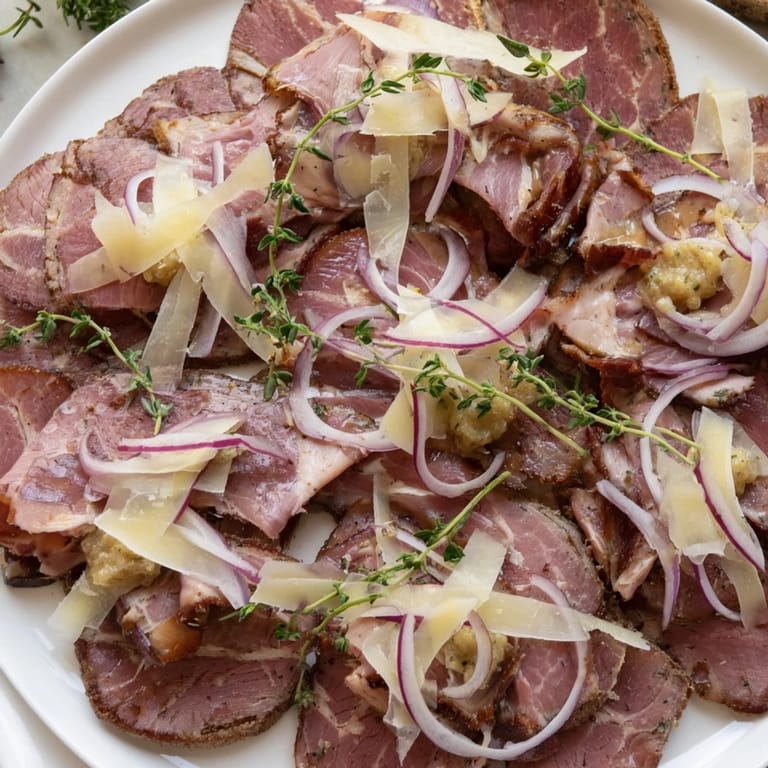
Save My aunt had this peculiar habit of arranging charcuterie boards like she was composing a landscape painting. One Sunday, watching her layer meats and shave cheese ribbons with meditative focus, I realized she wasn't just feeding people—she was telling a story with her hands. That moment taught me that simplicity, when arranged with intention, becomes something unforgettable. The Burlap & Lace is exactly that kind of dish.
I made this for the first time during a quiet autumn evening when friends dropped by unexpectedly. No fancy preparation, just what was in the kitchen arranged on an old wooden board my grandpa built. The way people leaned in to taste, pausing to admire before eating—that's when I understood why this combination has endured for centuries across European tables.
Ingredients
- Smoked beef: The foundation of bold flavor—slice or hand-tear it thickly so each piece feels substantial and substantial.
- Rustic country ham: Look for something with personality, roughly chopped rather than finely diced, keeping that rustic edge.
- Smoked sausage: Cut into thick rounds or wedges so the smokiness announces itself with every bite.
- Parmigiano Reggiano: Shave it paper-thin with a cheese plane; the translucent ribbons catch light and taste sharper, more crystalline.
- Aged Manchego: Its nutty warmth balances the beef's boldness—shave it just as thin for visual drama.
- Gruyère: The creamy anchor that ties everything together; shave generously and let it drape across the meats.
- Cornichons: These tiny pickles cut through richness with sharp acidity—they're the palate cleanser no one sees coming.
- Red onion: Slice it paper-thin; raw and slightly sweet, it adds a fresh crunch that prevents the platter from feeling heavy.
- Grainy mustard: Small dollops only—its seeds and vinegar punch wake up every pairing it touches.
- Fresh thyme or rosemary: Don't skip the aromatics; they add visual softness and a whisper of Mediterranean air to the platter.
- Crusty bread: Optional but recommended; it's the vehicle that lets people build their own bites and discover new combinations.
Tired of Takeout? 🥡
Get 10 meals you can make faster than delivery arrives. Seriously.
One email. No spam. Unsubscribe anytime.
Instructions
- Layer the meats with confidence:
- Arrange smoked beef, ham, and sausage in overlapping layers or rustic mounds across your wooden board. Don't worry about perfection—overlaps and gaps are what make it look alive and inviting.
- Create cheese ribbons:
- Using a vegetable peeler or cheese plane, shave each cheese into thin, translucent ribbons. Work slowly and let gravity help—these delicate strands are what transform rough meats into something refined.
- Fill the spaces:
- Scatter cornichons around the platter, nestle red onion slices between meats, and place small dollops of grainy mustard where they'll catch light. Think of this as seasoning the board itself.
- Garnish and honor the moment:
- Tuck sprigs of fresh thyme or rosemary around the arrangement—they're not just decoration, they perfume the air and signal that care went into this. Serve immediately, before anything loses its texture or intention.
 Save
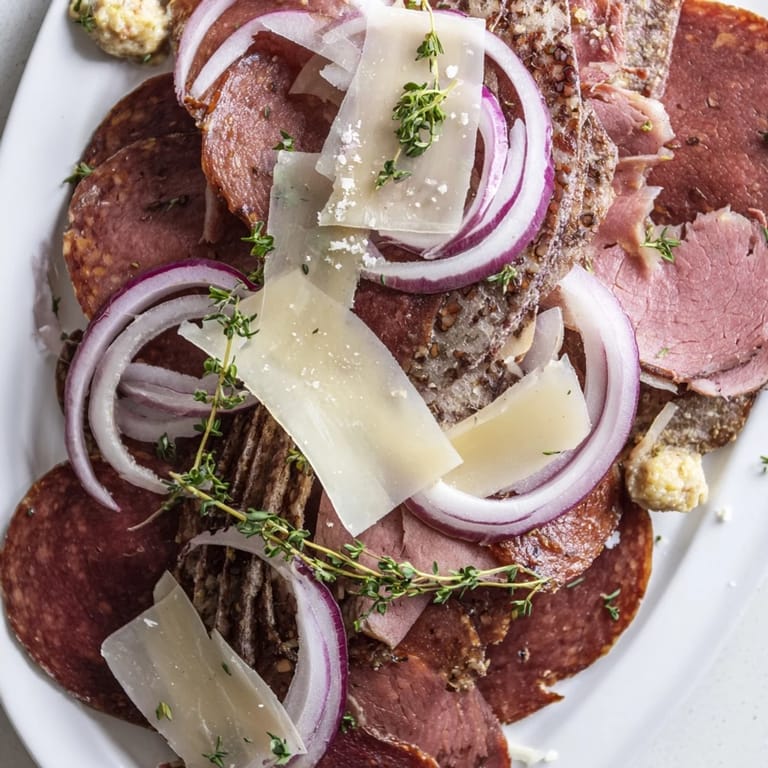
Save The best part about this platter isn't the ingredients—it's the conversation that happens around it. Watching someone discover that combination of salty ham, translucent Manchego, and sharp mustard, then seeing them reach for it again, that's when food becomes memory.
The Art of Balance
Every element here exists because it does something the others can't. The smoked meats bring earthiness and salt, the aged cheeses add sophistication and slight sweetness, the cornichons cut through with bright acidity, and the grainy mustard ties it all together with complex spice. This is what professional chefs call complementary opposition—rough paired with delicate, bold flavored with refined, heavy balanced by light.
Building Your Own Variations
Once you understand the formula—rough meats, aged cheeses, acid, aromatics, texture—you can bend it your way. I've added toasted walnuts for crunch, scattered dried apricots for subtle sweetness, swapped in Gruyère for Emmental, used prosciutto instead of ham. The structure holds regardless of which European flavors you choose to celebrate.
Pairing & Serving Wisdom
This platter was born to be social—it asks people to lean in, choose their own bites, and discover combinations. Pair it with a bold red wine if you're leaning into the smoked flavors, or a crisp, dry white if you want the cheeses to sing. The bread, if you offer it, becomes the frame that lets each element stand alone or work in harmony.
- Make sure your meats and cheeses come out of the cold 10 minutes before serving—cold dulls flavor, and these ingredients deserve to be tasted fully.
- Arrange everything on a wooden board rather than ceramic or glass; something about the warmth of wood makes the whole thing feel less precious and more inviting.
- Serve with small plates nearby so people can build individual bites without the awkwardness of reaching across others.
 Save
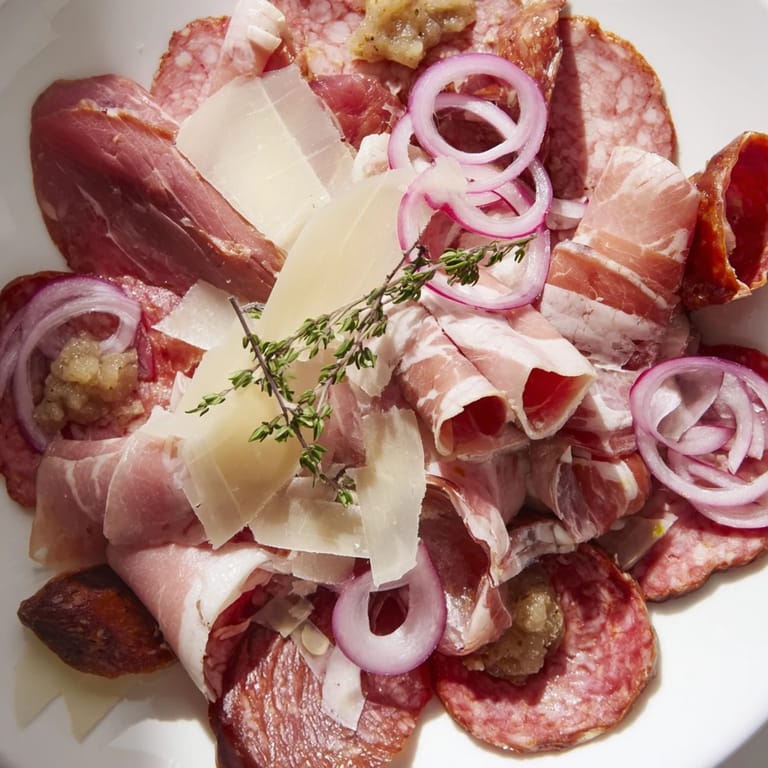
Save This is the kind of dish that reminds you food doesn't need to be complicated to be beautiful. Fifteen minutes, five ingredients categories, and suddenly you've created something people remember.
Recipe FAQs
- → What meats are ideal for this platter?
Smoked beef, rustic country ham, and smoked sausage with rough or thick cuts enhance texture and robust flavors.
- → How should the cheeses be prepared?
Use a vegetable peeler or cheese plane to shave thin translucent ribbons of Parmigiano Reggiano, Manchego, and Gruyère.
- → What accompaniments complement the platter?
Cornichons, thinly sliced red onion, grainy mustard, and fresh thyme or rosemary provide bright, tangy, and aromatic notes.
- → Can this be served with bread?
Yes, crusty baguette or rustic country loaf slices pair well for added texture and balancing flavors.
- → Are there suggested flavor enhancements?
Adding toasted walnuts or dried fruits like figs and apricots brings extra depth and subtle sweetness.