 Save
Save I stumbled onto the idea for this platter during a particularly uninspired Tuesday evening when I'd invited friends over with zero plan. Rifling through my cheese drawer, I noticed the blue cheeses lined up like little geological formations, and suddenly the whole presentation clicked into place. What started as improvisation became something I now make whenever I want to turn a simple gathering into a small moment of theater. The beauty is that it requires almost no cooking skill, just a willingness to play with what's already beautiful.
My neighbor brought a bottle of Sauternes the first time I made this, and watching her eyes light up as she recognized the mountain metaphor before anyone else even understood what they were looking at—that's when I realized presentation isn't just about how food looks, it's about giving people permission to enjoy it differently. She paired each blue cheese with a different wine note, turning the whole thing into this unexpected tasting adventure.
Ingredients
- Roquefort cheese: The French king of blues, peppery and sharp—use it as your visual anchor because its creamy crumble is unmistakable.
- Gorgonzola cheese: Italian, slightly sweeter than Roquefort, with a butter-soft edge that spreads beautifully across warm crackers.
- Stilton cheese: The British entry, a bit earthier and denser, it holds its shape best when cut into deliberate wedges.
- Bleu d'Auvergne cheese: A French softy with a milder personality, perfect for those who find pure Roquefort a bit much.
- Artisanal whole-grain crackers: Look for the sturdy kind that won't collapse under cheese weight—this is your foundation, literally.
- Honey: The sweet counterpoint that makes blue cheese suddenly feel elegant instead of aggressive.
- Toasted walnuts: Chopped roughly so you get texture, not a paste; toasting them first brings out their nuttiness.
- Fresh grapes or sliced figs: The jewel tones add visual pop and their sweetness creates a trilogy with the blue and the honey.
- Fresh herbs: Rosemary sprigs add an unexpected piney note and look architectural on the finished platter.
Tired of Takeout? 🥡
Get 10 meals you can make faster than delivery arrives. Seriously.
One email. No spam. Unsubscribe anytime.
Instructions
- Prepare your blues:
- Slice each cheese into rough, irregular wedges or chunks—you want jagged peaks here, not precision cuts. The more uneven they are, the more authentic that mountain range becomes.
- Build your base:
- Lay those crackers in a single layer across your platter or board. They're your sky, your foundation, your stage—arrange them so you've got a clear space for the cheese drama.
- Stack your range:
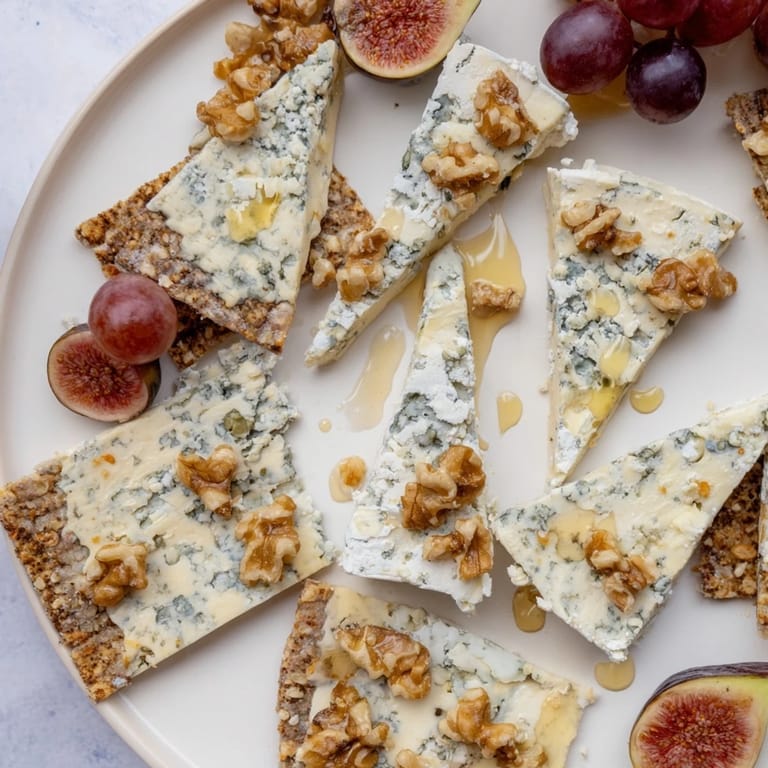
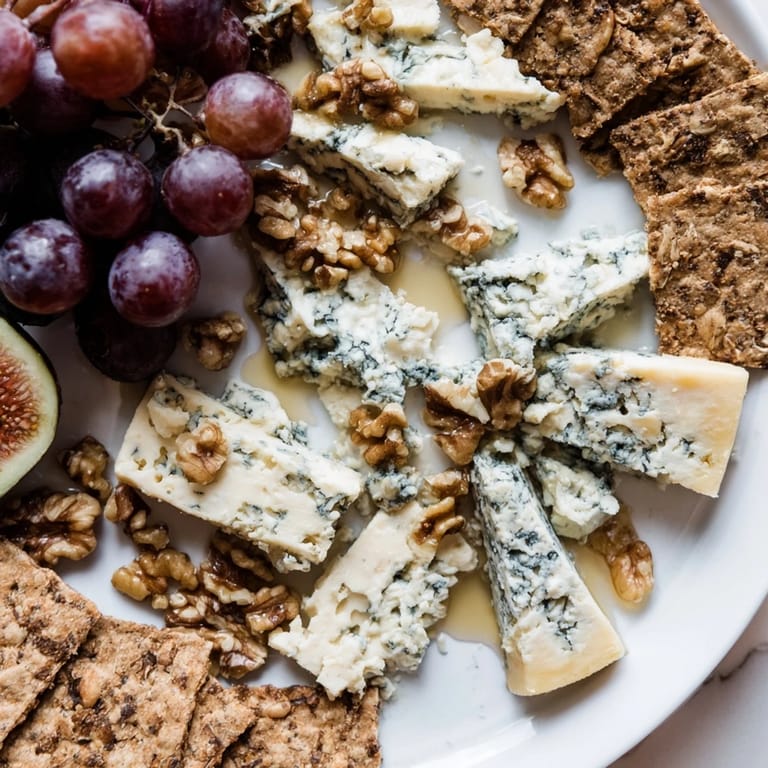
- Place the blue cheeses in a row, varying their heights and angles so they read as a natural horizon. Imagine you're looking at the Blue Ridge from a distance—staggered peaks, not a perfectly level line.
- Drizzle and scatter:
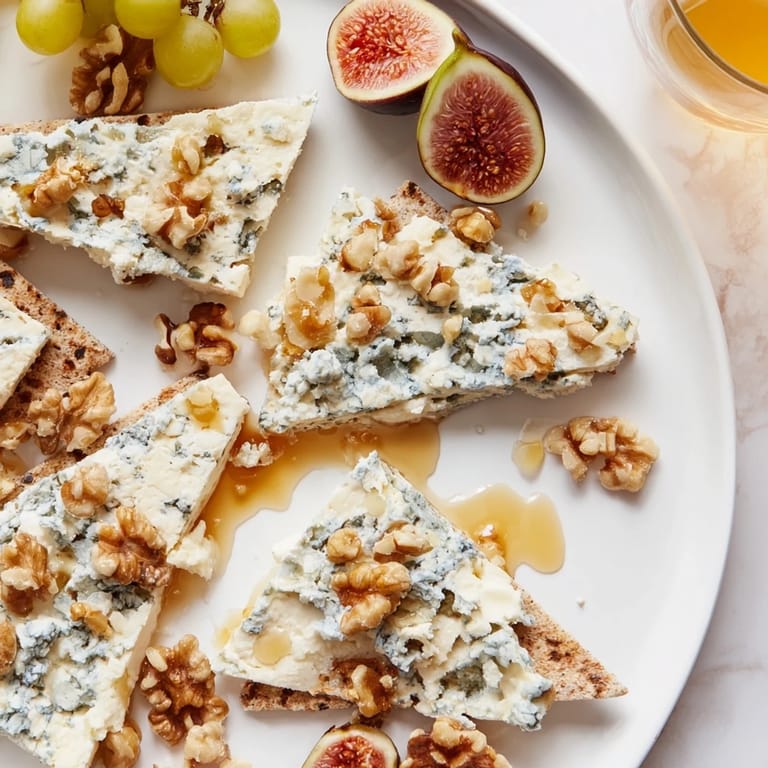
- Honey goes on in a light stream across the cheeses—you want streaks, not puddles. Sprinkle the walnuts over everything so they catch the light and add crunch.
- Add the color:
- Scatter grapes or fig slices around the platter's edges. They act like the valleys between mountains, giving your eye places to rest.
- Finish and serve:
- Tuck herb sprigs into gaps if you're using them, then bring the whole thing to the table immediately. Cheese tastes best when it hasn't been sitting under a kitchen light.
 Save
Save There's something quietly magical about watching people approach a food platter that isn't trying to feed a crowd in the traditional sense, but rather invite them to linger. This arrangement slows people down, makes them think about what they're choosing and why, and suddenly cheese becomes a conversation instead of just an appetizer.
The Blue Cheese Hierarchy
Each of these four blues brings its own personality, and learning them is half the fun. Roquefort is the bold statement—it demands respect and pairs with sweet fruits. Gorgonzola is the smooth talker, easier to approach and slightly sweeter on the finish. Stilton is the reliable friend, consistent and trustworthy without being flashy. Bleu d'Auvergne is the gateway blue, perfect if you're introducing someone to the category. Serve them in this order if people are tasting intentionally, so their palates don't get overwhelmed early.
Pairing Philosophy
The honey-walnut-grape combination isn't random; it's about balance. Blue cheese has this assertive, almost spicy personality, and everything else on this platter is there to give it breathing room. The cracker provides structure, the honey adds sweetness, the nuts bring earthiness and crunch, and the fruit offers brightness. When you bite through all of them together, you're not tasting blue cheese anymore—you're tasting a complete thought.
Making It Your Own
This is genuinely one of the most adaptable recipes you'll ever make, because at its heart it's just an arrangement with intention. Some nights I skip the herbs and let the colors speak for themselves. Other times I add a drizzle of aged balsamic or swap the honey for a fig jam. The mountain range metaphor is just scaffolding—once you understand the principle, you can rebuild it however you want.
- Try swapping crackers for thin-sliced sourdough toasts or even crispy pita chips for a different textural surprise.
- Add dried apricots or dates instead of fresh fruit if you want something the platter can actually sit with for a while.
- For nut-free, pumpkin seeds offer the same crunch and earthiness that walnuts provide without the allergen issue.
 Save
Save This little arrangement proves that sometimes the most memorable food moments come from working with what you have and trusting that simplicity, when treated with care, becomes elegance. Serve it with intention and watch it transform a regular evening into something worth remembering.
Recipe FAQs
- → Which cheeses work best for this platter?
Blue-veined varieties like Roquefort, Gorgonzola, Stilton, and Bleu d'Auvergne provide distinct flavors and textures to mimic mountain peaks.
- → How can I arrange the cheese for visual impact?
Cut cheeses into irregular wedges and stagger their heights along crackers to create a natural mountain range effect.
- → What garnishes complement the cheese and crackers?
Drizzle honey, sprinkle toasted walnuts, and scatter fresh grapes or fig slices for sweetness and contrast.
- → Can this platter be adapted for dietary restrictions?
Yes, substitute walnuts with pumpkin seeds for nut-free options and use certified gluten-free crackers as needed.
- → What drinks pair well with this cheese arrangement?
A chilled Sauternes or a robust red wine enhances the flavors and balances the rich textures.