 Save
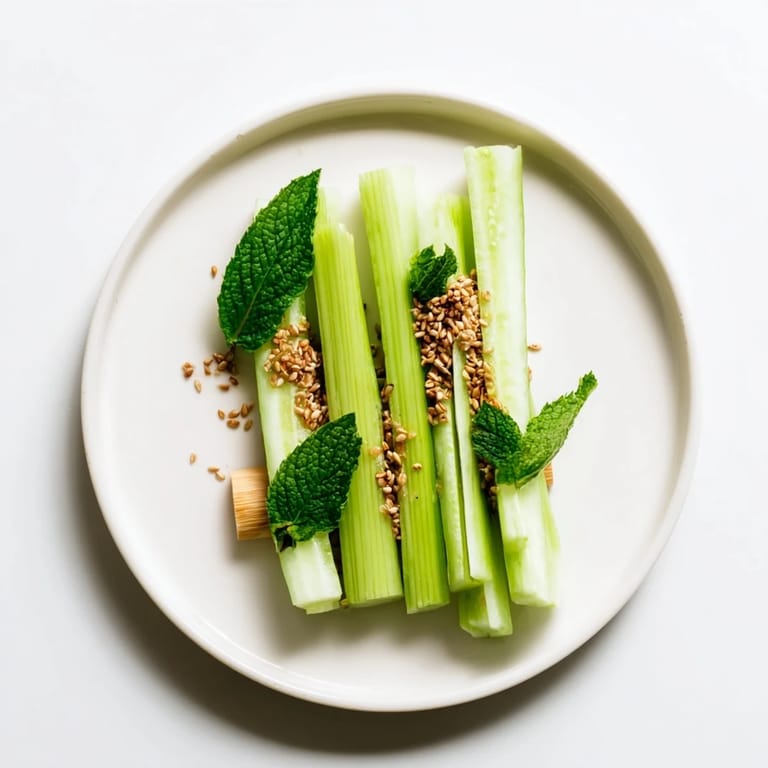
Save There's something about arranging vegetables on a plate that makes you slow down. I discovered this during a particularly rushed week when I was hosting dinner and realized I had almost no time to cook, yet wanted to serve something that felt intentional. The bamboo stalks of cucumber and celery, standing at attention like a miniature forest, turned what could have been nervous scrambling into something meditative. My guests arrived to find this quiet, elegant arrangement waiting, and the conversation naturally became gentler, more present. It taught me that sometimes the least you do in the kitchen is exactly what people need.
I remember serving this at a small gathering on a warm evening, and someone asked if the presentation was inspired by Japanese restaurants. It wasn't deliberate at that moment, but standing there watching them reach for the sticks and dip them thoughtfully, I realized how the vertical arrangement had actually changed how people ate—slower, more intentional, almost ceremonial. That's when I understood the real power of this dish: it's not about the vegetables themselves, but about the permission it gives everyone to pause.
Ingredients
- Cucumbers (2 large): Choose firm ones without soft spots, and if you can find them, English cucumbers have fewer seeds and a thinner skin that doesn't need peeling.
- Celery stalks (4 large): The outer stalks are sturdier for cutting into long sticks; save the tender inner heart for eating raw or in salads.
- Toasted sesame seeds (1 tablespoon): Toast them yourself if you can—the aroma that fills your kitchen is part of the experience, and they taste infinitely better than pre-toasted.
- Light soy sauce or tamari (1 tablespoon): Tamari is naturally gluten-free and tastes slightly richer; use whichever aligns with your dietary needs or preference.
- Rice vinegar (1 teaspoon): This brightens the salty dipping sauce and adds a subtle sweetness that balances everything.
- Fresh mint or basil leaves: Either works beautifully; mint adds cool clarity, basil brings warmth and earthiness to the plate.
Tired of Takeout? 🥡
Get 10 meals you can make faster than delivery arrives. Seriously.
One email. No spam. Unsubscribe anytime.
Instructions
- Wash and prep your vegetables:
- Hold each cucumber and celery stalk under cold water, letting your fingers find any hidden dirt in the crevices. Pat them completely dry—damp vegetables won't hold their crispness as long.
- Trim the ends:
- Remove the very ends with clean cuts; they tend to be the part that gets bendy or woody first.
- Cut into long sticks:
- Aim for sticks about 4 to 5 inches long, roughly the width of a pencil. Use a sharp knife and a smooth cutting motion rather than a sawing one—it keeps the vegetables from bruising at the cut edge.
- Arrange with intention:
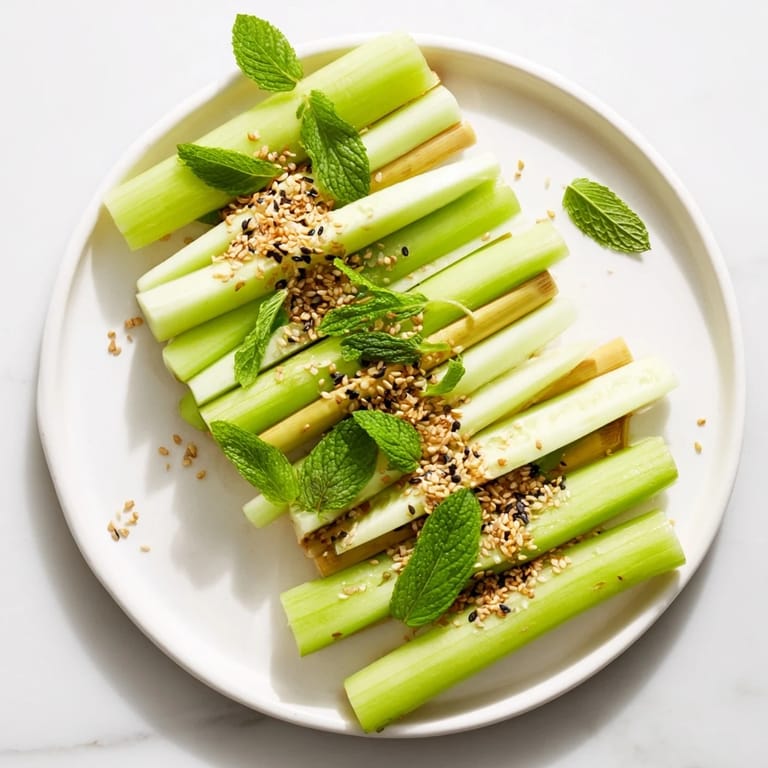
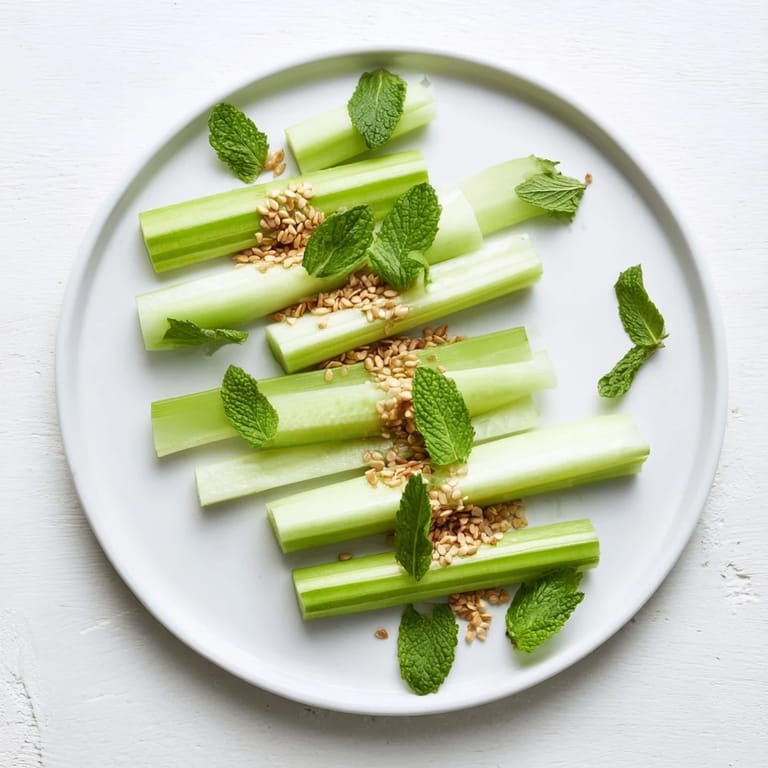
- Stand some sticks vertically, lay others horizontally, creating a pattern that feels balanced rather than chaotic. Think less about perfection and more about creating negative space on the platter.
- Chill and garnish:
- If you have time, let them sit on ice for 10 minutes before the final touches of sesame seeds and fresh herbs. The cold makes them snap when you bite them.
- Mix your dipping sauce:
- Stir the soy sauce and rice vinegar together in a small bowl and set it nearby. The simplicity of the dip lets the vegetables be the main event.
 Save
Save One night, a friend who usually scrolled through her phone at dinner sat down, reached for a celery stick, and just held it for a moment before dipping it. She didn't say anything, but I watched her shoulders relax. That's when I realized this dish does something few others do: it creates permission for slowness in a world that moves too fast.
The Art of Vegetable Selection
Not all cucumbers and celery are created equal, and choosing the right ones makes the difference between a good dish and one that feels alive on the plate. Look for cucumbers that are firm and uniform in color, without any soft spots or wrinkled skin; the weight should feel substantial in your hand. For celery, choose stalks that are crisp and snap loudly when you bend them—if they bend instead of break, they've lost their vigor and won't have that satisfying crunch your guests are expecting.
Making It Your Own
While this dish is perfect as written, it's also a canvas for whatever you have or crave that day. Carrots and daikon radish add beautiful color contrast and a slightly sweeter earthiness; bell pepper strips contribute a different kind of crunch. Watermelon radish, if you can find it, creates stunning visual interest when you slice it into long sticks, almost looking like a surprise waiting to be discovered. The dipping sauce can shift too—try mixing a teaspoon of Sriracha with the soy and vinegar for heat, or add a drop of sesame oil for richness.
Serving and Pairing
This appetizer shines when served ice cold, perhaps on a warm evening, as a quiet opener to a meal where people can settle in slowly. It pairs beautifully with chilled sake, light white wines, or even sparkling water with a splash of yuzu; the simplicity of the vegetables doesn't demand alcohol, so it works just as well as a standalone pause before dinner. The beauty of this dish is that it creates a moment before the meal really begins, a chance for everyone to breathe and arrive.
- Chill your serving platter in the freezer for 10 minutes before arranging the vegetables for maximum crispness.
- If you're serving this more than 15 minutes before guests arrive, keep it on ice underneath the platter rather than leaving it at room temperature.
- The sesame seeds and herbs should be added no more than 5 minutes before serving so they don't wilt or become soggy.
 Save
Save This dish reminds me that sometimes the most meaningful things happen in the spaces between abundance. Serve it with an open heart and watch how people respond when given permission to slow down.
Recipe FAQs
- → How should I prepare the celery and cucumber for best crunch?
Wash thoroughly and trim ends, then cut into long sticks about 4–5 inches. Soaking them in ice water for 10 minutes before serving adds extra crispness.
- → What dipping sauce complements the flavors?
A simple mix of light soy sauce or tamari with rice vinegar creates a tangy, savory dip that pairs well with the fresh vegetables.
- → Can I substitute or add other vegetables?
Yes, carrot or daikon sticks add color and texture variety while maintaining the refreshing quality.
- → What garnishes enhance presentation and aroma?
Toasted sesame seeds along with fresh mint or basil leaves offer both visual appeal and subtle herbal notes.
- → Is this dish suitable for gluten-free diets?
Use tamari instead of traditional soy sauce to keep it gluten-free, and always check condiment labels for allergens.